Water heater replacement: tank, tankless or heat pump
A way to compare storage tank, tankless and heat-pump water heaters by your household's hot-water pattern, fuel, space and installation needs, before asking for quotes.

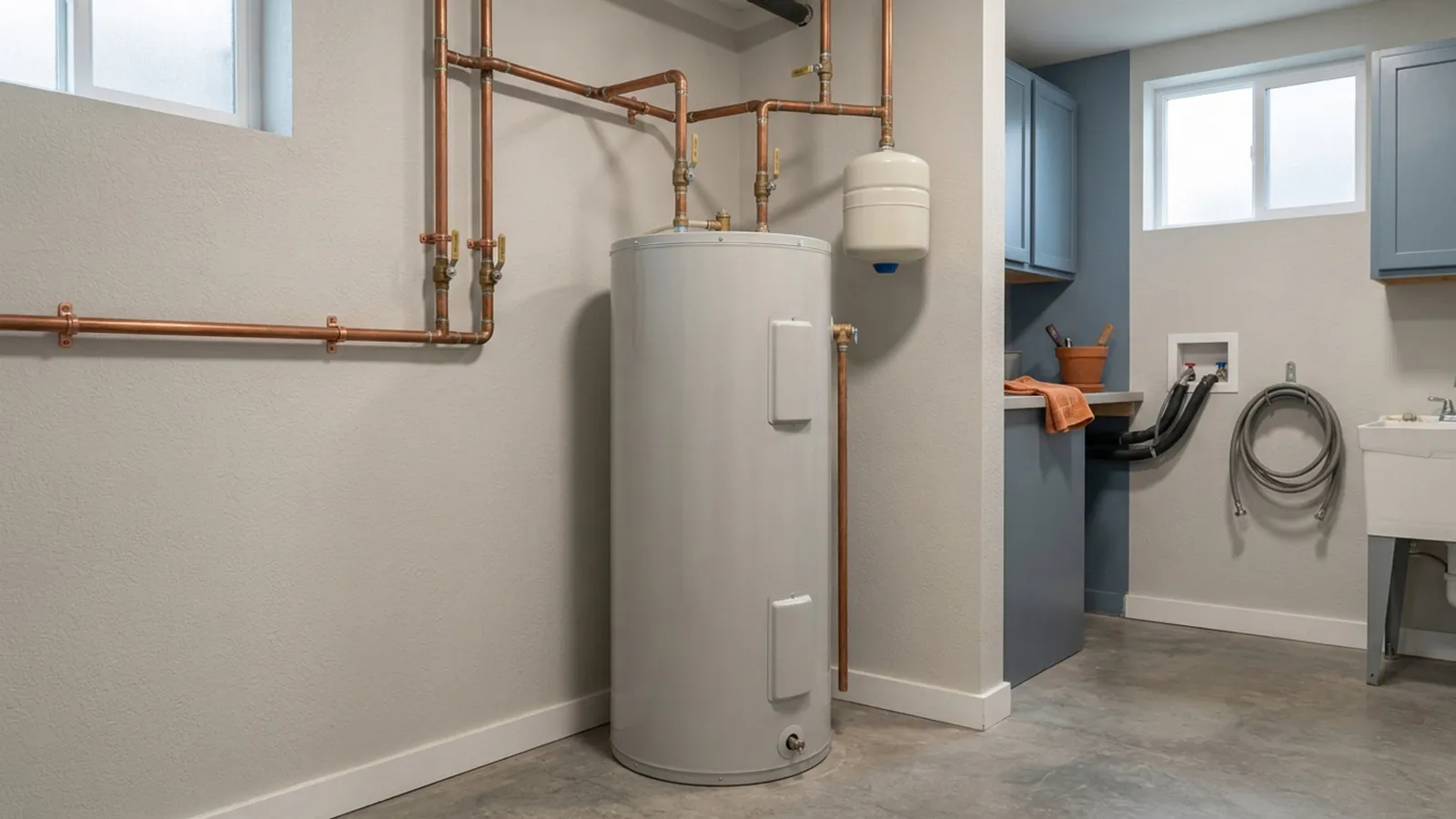
The water heater is old, and sooner or later it will fail. Replacing it on your own schedule is usually calmer than replacing it from a puddle on the garage floor, with one day to decide.
The three common choices work differently, so they fit households differently. This guide gives you a way to compare them using your own hot-water pattern, fuel, space and installation conditions. It deliberately avoids efficiency percentages, payback claims and rebate amounts: those change by model, fuel, utility and year, and they belong in a quote you can check.
Know what each type does
The plain-language descriptions below are general background, not quotations from a DOE or ENERGY STAR page. Where a specific measure is named, it comes from ENERGY STAR’s product criteria page (ENERGY STAR, Key Product Criteria, checked November 18, 2026).
A storage tank heater keeps a reservoir of hot water ready for use. ENERGY STAR’s criteria rate tank models by first-hour rating, meaning how much hot water the unit can deliver in its first hour of use.
A tankless (instantaneous) heater heats water as it flows rather than holding a reservoir. ENERGY STAR’s criteria rate gas tankless models by flow, at least 2.8 gallons per minute over a 67°F temperature rise. Flow is the limit to ask about, because several fixtures running at once can ask for more than one unit supplies.
A heat-pump water heater is an electric model that uses a heat pump rather than only electric resistance heating. ENERGY STAR requires manufacturers to report the ambient temperature below which the compressor shuts off and electric resistance-only operation begins, so ask about the space the unit will sit in and what happens when the air is cold.
ENERGY STAR lists heat pump, high-efficiency gas storage, whole-home gas tankless and solar water heaters as separate product categories (ENERGY STAR, checked November 18, 2026). That is a useful reminder that the type is only one choice. Fuel, efficiency rating and installation matter as much.
Start with what you have now
Record the existing unit before you shop: fuel (electric, natural gas, propane or oil), tank size, age, location, and what the label says about its model. Note the venting, the gas or electrical connection, and any nearby drain or pan. A like-for-like replacement is the simplest case. Changing fuel or type can mean new venting, a new circuit, condensate drainage or more room, and those costs can exceed the price of the appliance.
Gas and electrical connections, venting and combustion air are safety-critical. Leave them to licensed professionals, and ask who pulls any permit your local code requires.
Describe your hot-water pattern
Households differ more than the product categories suggest. Before comparing types, write down how your household uses hot water:
- How many people live in the home, and how many showers or baths happen in the busiest hour?
- Does anything else draw hot water at the same time, such as a dishwasher or washing machine?
- Is the pattern steady, or does it spike with guests, a large family or a soaking tub?
- Does the household spend long stretches away from home?
Installers size a storage tank by its capacity and how much it can deliver in the first hour. They size a tankless unit by how much flow it can supply at a given temperature rise. Ask any installer to show their sizing method and the numbers behind it rather than quoting a size by habit. Your written pattern is what they size against.
Compare the types against your constraints
A table keeps the comparison on your terms. The cells below describe questions to ask, not ratings.
| Question | Storage tank | Tankless | Heat pump |
|---|---|---|---|
| What limits it? | First-hour delivery | Flow at the temperature rise needed | Output and operation at the room’s temperature |
| What does it need around it? | Ask the installer about space, venting and connections | Ask about venting and gas or electrical capacity for its flow | Ask about space, air, drainage and the electrical circuit |
| What may change on installation? | Little, if like for like | Ask what changes from your current setup | Ask what changes from your current setup |
| What to ask the seller | Capacity, first-hour rating, warranty | Maximum flow at your temperature rise, maintenance | Operating modes, cold-air behavior, backup heating, room needs |
Whichever type you consider, ask for the rated efficiency of each specific model and a statement of how that rating was measured. Compare models in the same fuel class.
Look at installation, not just the appliance
The quote should say what is included. Compare the removal and disposal of the old unit, new venting or piping, electrical work, condensate drain, expansion tank or valves where required, permits, and the warranty terms for both parts and labor. The method in giving every contractor the same brief fits well here: write the description of your current unit and hot-water pattern once, then send it to each installer.
An energy assessment can also be worth doing first if the problem is a high bill rather than a failing heater. Start with a home energy assessment explains what to ask for.
Run your own operating-cost comparison
Operating cost depends on your fuel prices and rate plan, so it cannot be answered in general. To compare, ask each seller for the model’s rated energy use under stated conditions. Then price that energy at your own rates. Reading your electricity bill shows where the rate and any fixed charges sit. Natural gas, propane and oil have their own bill lines.
Here is an invented illustration of the method, with made-up numbers that are not from any real model or utility. A seller says Model A uses 3,000 kWh a year under the test conditions, and your plan charges 0.20 dollars per kWh. Then 3,000 x 0.20 = 600 dollars a year for Model A. If a second model uses 1,500 kWh, then 1,500 x 0.20 = 300 dollars a year. The gap is 300 dollars a year at that rate. Your own numbers will differ, and a time-of-use plan changes the arithmetic. The comparison is only as good as the energy figures and rates you plug in.
Check incentives separately
ENERGY STAR’s water heater page links to a Rebate Finder (ENERGY STAR, checked November 18, 2026). Federal, state and utility incentives change, have eligibility rules and sometimes need to be applied for before purchase. Confirm the current terms with the program, and treat an amount in a quote as a prompt to verify. Do not count a rebate you have not confirmed.
Plan for the replacement date
A water heater is one of the larger predictable repairs in a household. If yours is old, add it to your maintenance calendar and set money aside for it. Money Master’s guides on irregular expenses cover the funding side.
Common questions
Should I replace the heater before it fails? That depends on its age, condition and the cost of an emergency replacement. A plumber can tell you whether a unit shows signs of trouble. Waiting is reasonable only if you have a plan for a sudden failure, such as knowing the shutoff valve and having two installer contacts ready.
Is tankless always better because it never runs out? No. It can run out of flow, not storage, and it can require changes to gas, venting or electrical service. Match it to your peak demand.
Can I install it myself? Gas, venting and electrical connections are safety-critical. Use a licensed professional and follow local permit rules.
Which type is cheapest? It depends on fuel prices, installation, incentives and your usage. Compare the total installed cost and the estimated operating cost on your own rates.
Sources checked November 18, 2026: ENERGY STAR water heaters page (product categories and Rebate Finder link) and ENERGY STAR key product criteria (first-hour rating, tankless flow and heat-pump compressor reporting). This guide states no efficiency, lifespan or savings figures and treats the type descriptions as general background. Confirm them with DOE Energy Saver, ENERGY STAR and the manufacturer’s specifications.