Plan a water heater replacement before yours fails: tank, tankless or heat pump
How tank, tankless and heat pump water heaters differ, what to watch for on the one you have, and how to prepare for replacement while you still have hot water.

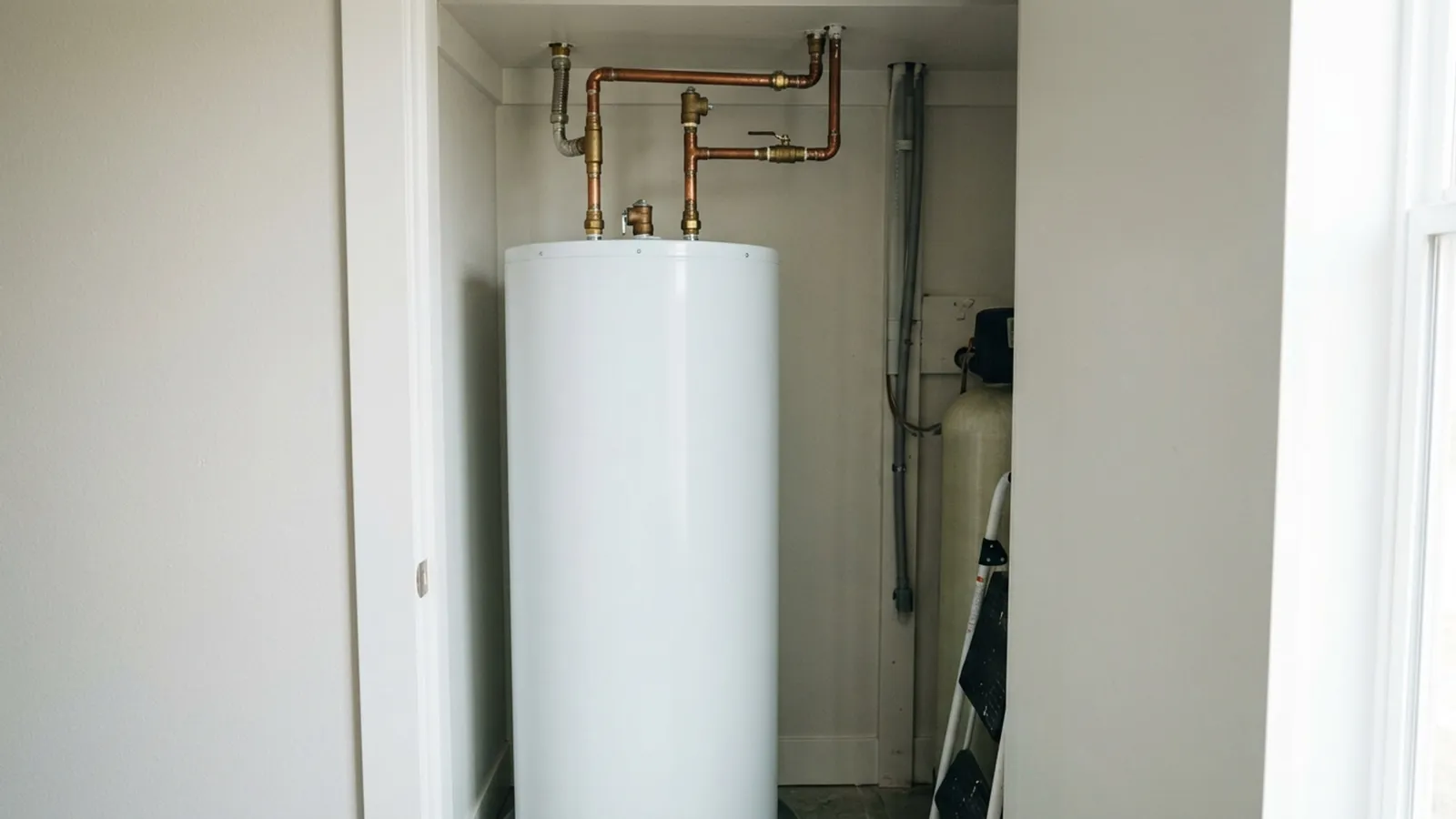
A water heater that fails on a Sunday leaves you with cold showers and a rushed decision. The heater you can choose calmly, with a few weeks of notice, is nearly always a better outcome than the one chosen in a day. This guide explains the main types and what planning ahead involves. It describes installation work rather than teaching it, because water, gas and electrical connections need a qualified, and in many places licensed, professional.
The three main types
ENERGY STAR lists several kinds of residential water heater, among them heat pump models, high-efficiency gas storage models and whole-home tankless gas models (ENERGY STAR, water heaters, checked November 18, 2026). A conventional electric tank is the baseline most homes start from.
Storage tank. A tank keeps a supply of hot water ready, gas or electric. It is familiar, and most plumbers can service one. The cost of that readiness is energy to keep the stored water hot.
Tankless (on demand). ENERGY STAR describes a gas tankless unit as having no storage tank: when a hot tap opens, a flow sensor fires the burner, water passes a heat exchanger and leaves at the set temperature, and combustion gases leave through a sealed vent (ENERGY STAR, how it works, checked November 18, 2026). The usual argument for tankless is that it avoids the energy used to keep a tank hot, though how much that saves depends on the household. The same page says condensing models need a vertical PVC vent and a condensate drain.
Heat pump. A heat pump water heater, also called hybrid electric, uses electricity to move heat rather than only to create it. ENERGY STAR advises installing one indoors where the temperature stays between 40 and 90 degrees Fahrenheit all year, with about 1,000 cubic feet of air space around it, and says a space with excess heat, such as a furnace room, is preferred. In colder conditions the unit may switch to a standard electric heating mode, which increases energy use (ENERGY STAR, heat pump water heaters, checked November 18, 2026).
What each choice asks of your home
The type matters less than whether your house suits it. Questions worth asking an installer:
- Fuel and connections. For a gas tankless unit, ENERGY STAR says an installer should confirm whether the existing gas line is adequate, whether electricity is near the unit for forced-ventilation models, and how combustion gases will be vented (ENERGY STAR, gas tankless water heaters, checked November 18, 2026). These are installer decisions, not DIY ones.
- Flow. Tankless units are rated in gallons per minute. ENERGY STAR gives average flows of 2.5 for a shower, 3.3 for a clothes washer and 1.3 for a dishwasher, so a household that runs several at once needs a higher rating. Those averages are for planning, not a substitute for an installer’s measurement.
- Space and climate. A heat pump unit needs the room and temperature range above. A cramped closet may not work.
- Capacity. For a tank model, ENERGY STAR’s heat pump page suggests starting from your current tank’s gallon capacity and considering a larger unit if the household is growing or adding heavily used fixtures. Tankless units are sized by flow instead, as above.
An illustrative example, with invented figures: a household of four showers in the morning while the dishwasher runs. Hot-water demand peaks at the same time, which favors a larger tank or a higher flow rating over a small unit sized for averages.
For heat pump units, the Department of Energy’s FEMP page says they have a filter that needs regular cleaning, and some models alert you when it is due. It also says not to wrap heat pump water heaters with insulation blankets (DOE FEMP, residential water heaters, checked November 18, 2026). ENERGY STAR adds that these units may need annual maintenance, including changing air filters, per the manufacturer’s instructions.
Maintenance: what the manual says
Water heaters differ, so the manual for your model is the authority on routine care. The rest is about observation. Note where the unit is, the date on its label, the warranty terms and any service record, and put them in the same place as the rest of your home maintenance calendar. This guide gives no lifespan figure, because the age at which a heater should be replaced depends on its type, water quality and use. Your installer or the manufacturer can say what is reasonable for your model.
On the thermostat setting, the Department of Energy’s Energy Saver page for renters says lowering it from 140 to 120 degrees Fahrenheit can reduce scalding risk, slow pipe buildup and save money, but that people with a compromised immune system or chronic respiratory disease may want to keep it at 140 (DOE Energy Saver, renters, checked November 18, 2026). If you are unsure, ask a doctor or the installer, and do not change a setting you do not understand.
Signs of trouble
Treat these as reasons to have someone look, not as a diagnosis: water pooling around the base, damp or stained flooring, rust-colored hot water, rumbling or popping sounds, hot water running out sooner than it used to, or a heater that is far past the age its manual or installer suggests. A leak is the one to act on quickly. Know where the water shut-off to the heater is, and for gas or electric supply, turn off only what you have been shown how to turn off.
As general safety guidance, a gas smell, a flame that looks wrong or an alarm sounding is an emergency: leave and call your gas utility or 911 from outside.
Planning before it fails
Planning is mostly preparing so that you have options:
- Record the model, age, location and fuel now.
- Decide what would change the choice: heat pump space, gas line capacity, a planned move.
- Ask for written estimates from more than one installer, with the same brief. ENERGY STAR advises requesting written estimates and references and confirming the company handles any local permit. The same-brief approach works well here.
- Check what incentives exist where you live. ENERGY STAR points to its Rebate Finder; amounts and eligibility change, so confirm them before you buy. This guide does not state any.
- Ask how long the installer needs to order the model. ENERGY STAR notes installation can take longer than for a standard water heater.
If a larger efficiency project is on your mind, an assessment first can show where hot water sits among your other costs. How to pay for a replacement is a money question: Money Master covers setting funds aside.

Renters
A renter usually cannot choose or replace the heater. Report slow hot water, leaks or odd noises promptly, in writing, and ask the landlord or manager who is responsible for the heater under your lease.
Common questions
Is tankless always better? No. It suits some households and homes, and needs the gas, venting and flow checks above.
Can I move to a heat pump unit? Possibly, if the space and climate fit. An installer should confirm.
Should I replace it before it fails? That is your call. The point of this guide is to leave you with a choice either way.
Sources checked November 18, 2026: ENERGY STAR water heaters; ENERGY STAR heat pump water heaters; ENERGY STAR gas tankless and how it works; DOE FEMP; DOE Energy Saver, renters. This guide gives no lifespan figure; ask the manufacturer or installer.