What a home battery can and cannot keep running in an outage
A home battery does not automatically keep the whole house running: what it can power, how long, and what to ask before you buy depends on the setup.

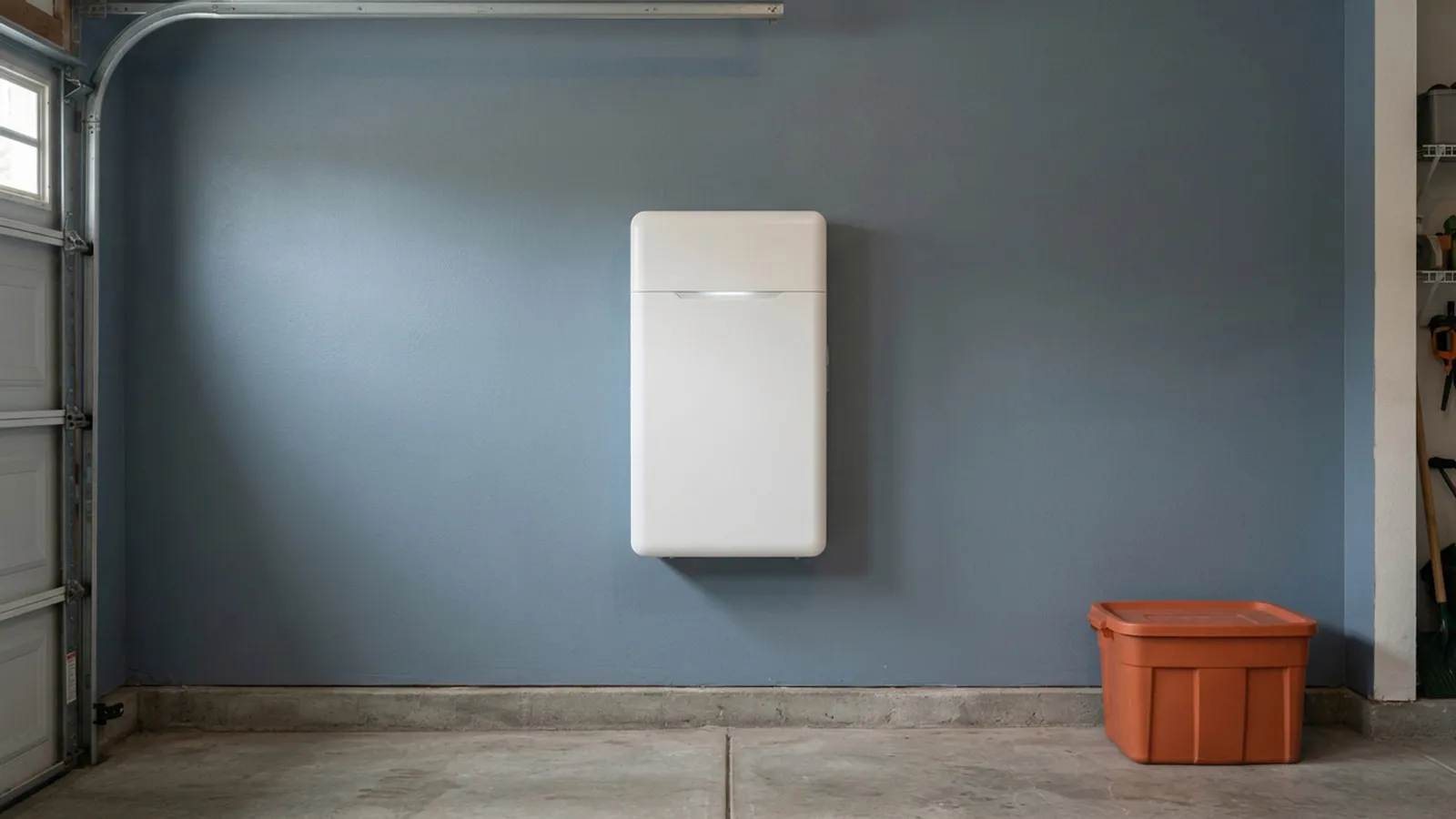
Home batteries are often sold with the phrase “backup power.” That phrase covers a lot of ground. One household’s battery might keep the refrigerator, some lights and the internet router running overnight. Another’s might carry most of the house for a day. A third, wired differently, might do nothing at all when the grid goes down. What you get depends on how the system is designed, how big it is and what is connected to it.
This guide covers the questions that decide the answer. Installation is work for a licensed electrician and a qualified installer.
A battery is not automatically backup power
Batteries are installed for several reasons: using stored solar power later in the day, shifting use away from expensive hours, or keeping some circuits on during an outage. These are separate functions. A system built for the first two may not be set up for the third.
The U.S. Department of Energy says solar panels need storage to keep a home powered during an outage, and that residential systems with batteries can detect the loss of grid power and switch to an “islanded” mode (DOE, Solar and Resilience Basics, checked November 18, 2026). The same page says solar systems are designed to switch off when grid power cuts out, for safety, and that solar needs a properly configured inverter and a storage system to produce power on its own.
In plain terms: panels alone will not keep the lights on during an outage. A battery may, if the system is configured to do it. Whether yours is configured that way is a question for the installer, and it belongs in writing in the proposal.
What “whole home” and “partial home” backup mean
Installers commonly describe backup in two ways. These are industry descriptions rather than official categories, so ask each company what its terms mean in your quote.
In a partial-home design, a selected set of circuits is connected to the battery. Households often choose things like the refrigerator, a few lighting circuits, internet equipment and phone charging. Anything not on that selection goes dark during an outage.
In a whole-home design, the battery is intended to supply most or all of the house. It still has limits: it can only deliver so much power at once, and it only holds so much energy.
The practical question is which circuits are covered. Deciding that, and wiring it, is electrician work. What you can do beforehand is list the things your household would want running.
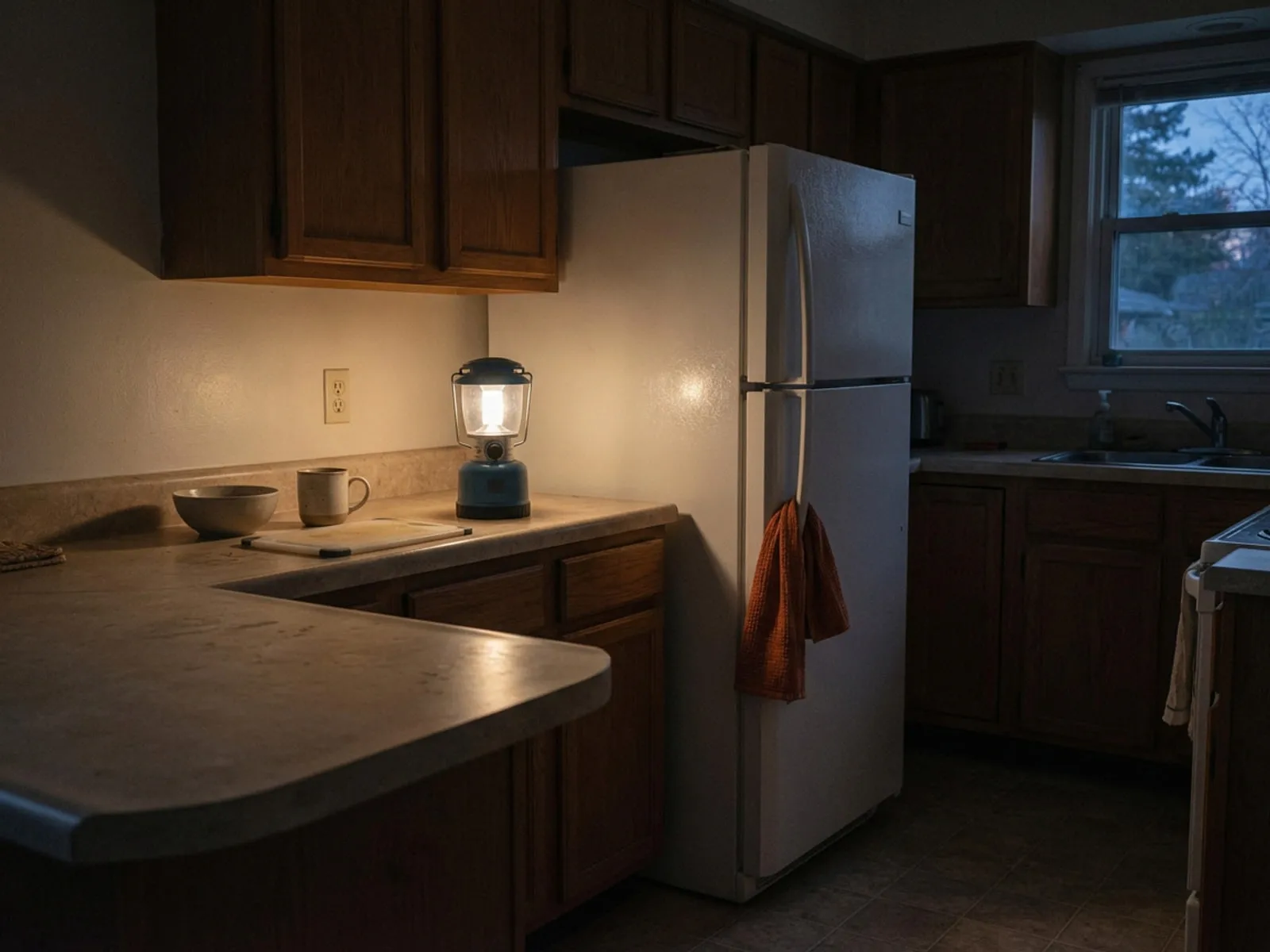
Two numbers that set the limits
Two figures describe any battery, and they answer different questions.
Energy capacity is how much the battery stores, usually shown in kilowatt-hours (kWh). It decides how long the battery can keep things going.
Power rating is how much the battery can deliver at one moment, usually shown in kilowatts (kW). It decides what can run at the same time.
A battery can have plenty of stored energy and still be unable to start a large appliance, or have a high power rating but run flat quickly. Ask for both numbers for backup mode specifically. Ask also whether the figures are usable capacity or total capacity, and whether backup mode changes them.
A simple runtime estimate, with invented numbers
The arithmetic is simple: hours of runtime is roughly usable stored energy divided by the power drawn. Here is an invented example, not a product specification or a promise.
Suppose a household has a battery with 10 kWh of usable energy. During an outage it wants to run a refrigerator, some lights, a router and device chargers, and together they draw about 0.5 kW on average. Then 10 kWh ÷ 0.5 kW = 20 hours.
If the same household also ran a space heater or an air conditioner drawing 2.5 kW, total draw would be 3 kW, and 10 kWh ÷ 3 kW is about 3.3 hours. The battery has not changed. The load has.
Real draw varies, and motors can surge at start-up. Treat any such estimate as rough, and ask the installer to work through your own list.
Heavy loads are where backup usually runs out
Some household equipment draws a lot of power: electric water heaters, ovens and ranges, electric dryers, central air conditioning, electric heating and well pumps. A battery that runs the essentials for a day may be unable to support these, or may drain quickly if they are connected.
Decide in advance what matters most, and ask which of these loads, if any, the proposed system is designed to carry.
On safety, Ready.gov advises never using a gas stovetop or oven to heat your home, and using generators and fuel only outdoors at least 20 feet from windows, doors and attached garages (Ready.gov, Power Outages, checked November 18, 2026). A home battery is not a generator in the fuel sense, but the principle holds: do not improvise unsafe heat or power during an outage.
Solar changes how long backup lasts
If the battery is paired with solar panels, the system can recharge in daylight during a long outage. DOE says that in a long outage, solar with storage can continue delivering power, even at night (DOE, Solar and Resilience Basics, checked November 18, 2026). How much recharging you get depends on weather, season, shading and system size.
A battery without solar only has what it stored before the outage began. When it is empty, it is empty. Ask what the system does if the outage starts when the battery is already partly drained, and whether you can set a reserve level for outages.
Medical devices, food and other priorities
If anyone in your household relies on power-dependent medical equipment or refrigerated medicine, a battery cannot be treated as a guarantee. Ready.gov advises making alternate plans for refrigerating medicines or using power-dependent devices, and asking your medical provider for an outage plan (Ready.gov, Power Outages, checked November 18, 2026). Keep that plan whether or not you own a battery.
On food, Ready.gov says a refrigerator keeps food cold for about four hours and a full freezer holds temperature for about 48 hours, and that food that has reached 40 degrees or higher should be discarded. A battery that powers the refrigerator changes that picture, but only for as long as it lasts.
Questions to put to an installer
Before you compare quotes, ask each company for written answers on the following.
- Which circuits or appliances will be powered during an outage, and which will not?
- What are the usable capacity and the backup power rating?
- Does the system switch over automatically, and how quickly?
- What happens if the grid is down for several days, with and without sun?
- Can the battery be set to hold a reserve for outages?
- What does it cost, what incentives apply, and what does the warranty cover?
DOE’s solar guidance says to ask whether the installer offers battery storage options, look for North American Board of Certified Energy Practitioners certification, and review the educational materials before signing anything (DOE, Homeowner’s Guide to Solar, checked November 18, 2026). It adds that a qualified installer should meet local building, fire and electrical codes. Local codes may also have specific requirements for batteries, so confirm with your local permitting office.
To judge whether a battery fits your overall plan, see gathering the inputs before asking about solar and how to read your electricity bill. If you are weighing cost, Money Master covers the funding side at https://moneymaster.fyi/.
Common questions
Will a battery keep my whole house running? Only if the system is designed and sized for that, and even then only while stored energy lasts. Ask for the covered circuits in writing.
Will solar panels alone work during an outage? DOE says solar systems are designed to switch off when grid power cuts out, and need a properly configured inverter and storage to produce power on their own.
How long will a battery last? That depends on usable capacity and what you run. Dividing usable kWh by the draw in kW gives a rough figure, as in the invented example above.
Can I wire a battery myself? No. Electrical work belongs to a licensed professional who follows local codes and permits.
Sources checked November 18, 2026: DOE, Solar and Resilience Basics; DOE, Homeowner’s Guide to Solar; Ready.gov, Power Outages.