Freeze and thaw food safely: 0°F, storage times and the three safe thawing methods
How freezing keeps food safe, why freezer storage times are about quality, the three safe ways to thaw, and when you can refreeze.

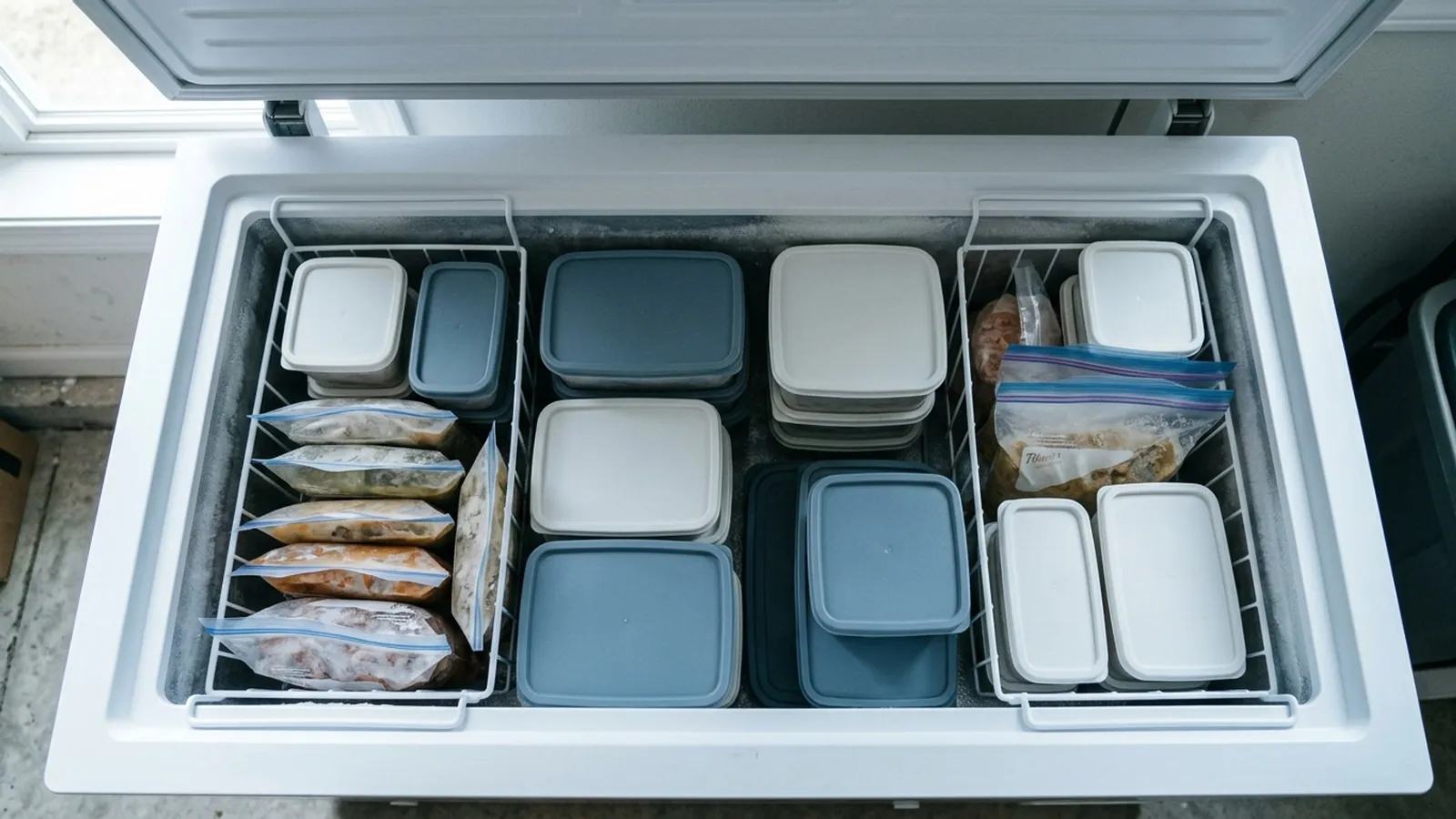
The freezer is the most useful tool for wasting less food. It is also the source of two common worries: how long is too long, and what is the safe way to thaw? The official guidance answers both clearly.
This guide covers the freezer itself, how to read storage times, thawing and refreezing. It does not repeat how to cook, cool and portion a large batch; for that, see batch cooking for your real schedule, freezer space and appetite. The main source is the USDA Food Safety and Inspection Service (FSIS), whose freezing page covers meat and poultry mainly; check package labels for other foods.
Why 0°F matters
FSIS says food stored constantly at 0°F will always be safe, and that only quality suffers with lengthy freezer storage. Freezing slows the movement of molecules and sends microbes into a dormant stage. FSIS says freezing to 0°F inactivates bacteria, yeasts and molds. Once food thaws, those microbes can become active and multiply, so thawed food must be handled like any perishable food (FSIS: freezing and food safety, checked November 18, 2026).
FSIS recommends keeping an appliance thermometer in the freezer to check the temperature. It also says that if a refrigerator’s freezer compartment cannot hold 0°F, or the door is opened often, use it only for short-term storage and eat that food soon. For long-term storage it suggests a free-standing freezer at 0°F or below. The refrigerator itself should be at 40°F or below.
Storage times are about quality, not safety
FSIS is explicit: because freezing keeps food safe almost indefinitely, its recommended storage times are for quality only. Its freezer chart at 0°F lists these months for best quality:
| Food | Months |
|---|---|
| Bacon and sausage | 1 to 2 |
| Ham, hot dogs and lunch meats | 1 to 2 |
| Uncooked ground meat | 3 to 4 |
| Uncooked steaks or chops, and roasts | 4 to 12 |
| Cooked meat | 2 to 3 |
| Uncooked whole poultry | 12 |
| Uncooked poultry parts | 9 |
| Cooked poultry | 4 |
| Soups and stews, casseroles | 2 to 3 |
| Frozen dinners and entrees | 3 to 4 |
| Egg whites or substitutes | 12 |
If a food is not on the chart, FSIS says to judge its quality after thawing. Check the smell first: some foods develop a rancid or off odor when frozen too long and should be discarded. Others may look less than perfect but be edible, and FSIS suggests using them in soups or stews.
This only holds if the food was handled well before it went in. FSIS notes that freshness and quality at freezing matter: food frozen at peak quality thaws better than food frozen near the end of its useful life. So freeze what you will not use soon rather than later.
Freeze for quality
A few steps from FSIS keep food tasting better. Package food to limit air contact; meat and poultry may be frozen in the original wrap, but that wrap lets air through, so overwrap it for long storage. If a package tears in the freezer, the food is still safe to use; rewrap it. Freeze food quickly, ideally spread in a single layer rather than stacked, and stack only once frozen solid. FSIS says a food two inches thick should freeze completely in about two hours.
Freezer burn is a quality issue. FSIS describes grayish-brown leathery spots caused by air contacting the food; it does not make food unsafe, and you can cut those areas away before or after cooking. FSIS adds that emulsions such as mayonnaise or cream can separate and look curdled after thawing, especially when freezing is slow.
The three safe ways to thaw
FSIS names three: in the refrigerator, in cold water, or in the microwave. It says never to thaw food in a garage, basement, car, dishwasher or plastic garbage bag, or on the kitchen counter, outdoors or on the porch, because those methods can leave food unsafe.
Refrigerator. This is the best-planned option. Small items may thaw overnight and most foods need a day or two. FSIS says large items such as turkeys take approximately one day per 5 pounds. As an invented example, a 15-pound turkey would need about three days (15 ÷ 5 = 3).
Cold water. For faster thawing, put the food in a leak-proof plastic bag and submerge it in cold water. Check that the water stays cold and change it every 30 minutes. FSIS warns that a leaking bag can let in bacteria and that tissues can absorb water. Cook immediately after thawing.
Microwave. Plan to cook right away, because parts of the food may warm and start to cook during defrosting.
You can also cook many foods from frozen. FSIS says raw or cooked meat, poultry or casseroles can be cooked or reheated from frozen, taking about one and a half times as long. Some products, such as pre-stuffed whole birds, must be cooked from frozen, so read the package label.
Refreezing: what is allowed
According to FSIS, food thawed in the refrigerator can be refrozen without cooking, though quality may drop because of moisture lost in thawing. Food that was raw and frozen can be cooked and then frozen again. Previously cooked food that was thawed in the refrigerator can have the unused part refrozen; FSIS says to freeze leftovers within three to four days. Do not refreeze food left outside the refrigerator for more than two hours, or one hour above 90°F. Meat, poultry or fish bought already frozen at a shop can be refrozen if handled properly.
If the freezer fails
Ready.gov says thawed food can usually be eaten if it is still “refrigerator cold,” and can be refrozen if it still contains ice crystals; it advises throwing away perishable food that has been above 40°F for two hours or more, and, “when in doubt, throw it out.” (Ready.gov: food, checked November 18, 2026). Keep the freezer door shut.
Common questions
Is frozen food that is a year old safe? FSIS says food kept at a constant 0°F stays safe, and that storage times are for quality. Judge the quality after thawing.
Can I thaw on the counter? No. FSIS lists the counter among methods that can leave food unsafe.
Does freezing kill germs? FSIS says it inactivates them, but they can become active again after thawing.
Where does this fit in a meal plan? See planning a week of meals; decide which night each frozen item will be eaten, and move it to the refrigerator in time.
Sources checked November 18, 2026: FSIS, Freezing and Food Safety (page last updated August 9, 2024); Ready.gov, Food.