Leftovers and freezer food: how long it stays safe
USDA guidance on cooling, storing, freezing, thawing and reheating leftovers, with the refrigerator and freezer time limits and a simple labeling routine.

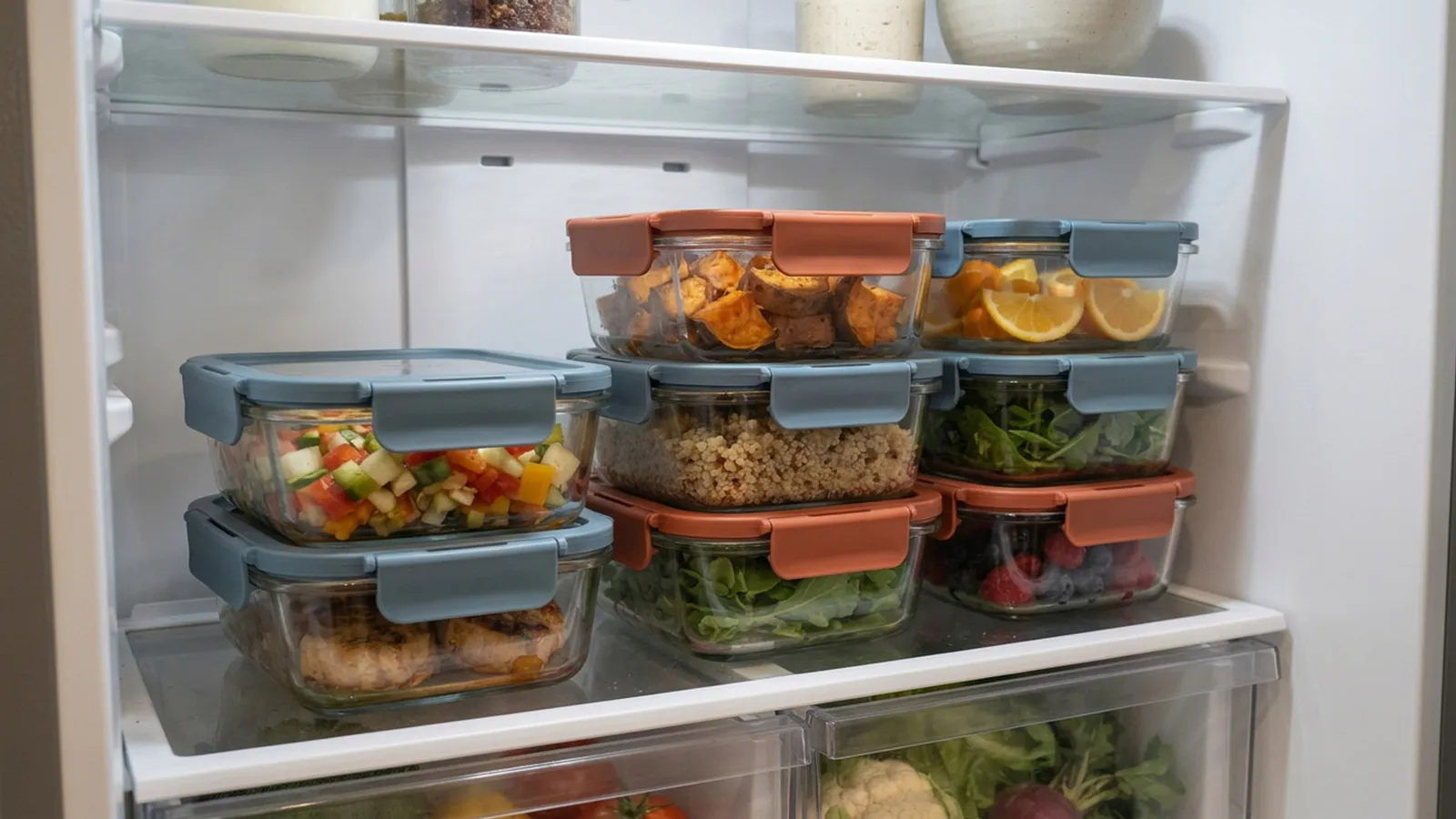
Most households end up with leftovers: a pot of chili, half a roast chicken, a takeout box. Whether they are safe on day five is a common question. The answer depends on how quickly they were cooled, how cold the refrigerator is and how long they have been stored.
This guide follows the U.S. Department of Agriculture’s Food Safety and Inspection Service (FSIS) and the federal FoodSafety.gov storage chart. It is general information. If anyone in the household is pregnant, elderly, very young or has a weakened immune system, check the agencies’ guidance for higher-risk groups.
Get leftovers into the fridge within two hours
FSIS says bacteria grow rapidly between 40°F and 140°F, and that leftovers must be refrigerated within 2 hours of cooking or of being removed from an appliance that kept them warm. Perishable food left at room temperature more than 2 hours should be thrown away, or 1 hour if the temperature is above 90°F, such as at a summer picnic (USDA FSIS, Leftovers and Food Safety, checked November 18, 2026).
Keep a refrigerator thermometer in the fridge. FSIS gives 40°F or below as the safe refrigerator temperature, and FoodSafety.gov’s chart uses 40°F or below for refrigerator times and 0°F or below for the freezer (FoodSafety.gov, Cold Food Storage Chart, checked November 18, 2026).
Cool food quickly in small containers
A large pot cools slowly in the middle. FSIS advises dividing large amounts into shallow containers so food reaches refrigerator temperature as fast as possible, and cutting large items such as roasts or turkey into smaller portions. Hot food can go directly into the refrigerator, or be chilled first in an ice or cold-water bath (FSIS, Leftovers and Food Safety).
Cover leftovers or seal them in airtight containers. This keeps bacteria out, retains moisture and stops food picking up odors from the rest of the fridge (FSIS, same page).
How long leftovers last in the fridge
FSIS says leftovers can be kept in the refrigerator for 3 to 4 days (FSIS, Leftovers and Food Safety). The FoodSafety.gov chart is consistent for most cooked foods (FoodSafety.gov, Cold Food Storage Chart, checked November 18, 2026):
| Food | Refrigerator (40°F or below) |
|---|---|
| Soups and stews with vegetables or meat | 3 to 4 days |
| Cooked meat or poultry | 3 to 4 days |
| Chicken nuggets or patties | 3 to 4 days |
| Pizza | 3 to 4 days |
| Egg, chicken, ham, tuna and macaroni salads | 3 to 4 days |
| Hard-cooked eggs | 1 week |
The chart lists many other foods, including raw meat, fish and eggs. The times for those are different, so check the chart rather than applying the leftovers rule to them.
How long food lasts in the freezer
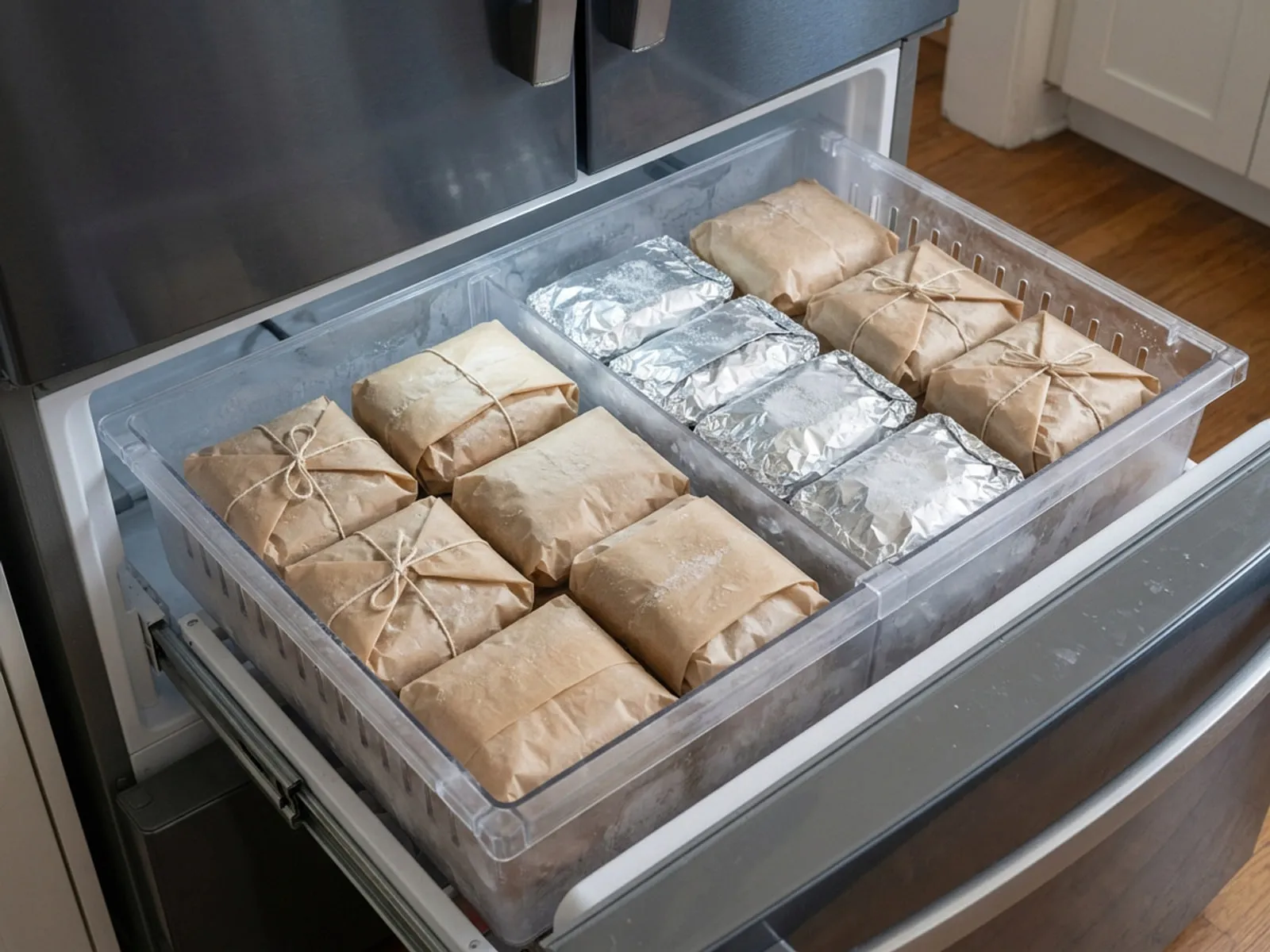
Here the two sources need careful reading. FoodSafety.gov says its freezer times are for quality only, and that food kept continuously at 0°F or below can be kept indefinitely. FSIS says the same in its own words: frozen leftovers are safe indefinitely, but they can lose moisture and flavor when stored longer, and it gives 3 to 4 months as the guide for leftovers (FSIS, Leftovers and Food Safety).
The chart gives times for specific foods (FoodSafety.gov, Cold Food Storage Chart):
| Food | Freezer (0°F or below), for quality |
|---|---|
| Soups and stews | 2 to 3 months |
| Cooked meat or poultry | 2 to 6 months |
| Chicken nuggets or patties | 1 to 3 months |
| Pizza | 1 to 2 months |
| Egg, chicken, ham, tuna and macaroni salads | Does not freeze well |
The two figures overlap rather than conflict: the number is a quality window. Food past it is not automatically unsafe, but it may taste worse. Use the shorter windows as a rotation guide.
Thaw and reheat safely
FSIS lists three safe ways to thaw: in the refrigerator, in cold water, or in the microwave. Refrigerator thawing is slowest but the food stays safe throughout, and food thawed that way should be used within 3 to 4 days or can be refrozen. Cold-water thawing needs a leak-proof bag, and food thawed that way should be cooked before refreezing. Microwave-thawed food should be heated until it reaches 165°F, and can then be refrozen (FSIS, Leftovers and Food Safety).
It is also safe to reheat frozen leftovers without thawing, though it takes longer. When reheating, leftovers should reach 165°F as measured with a food thermometer, and sauces, soups and gravies should be brought to a rolling boil. Cover the food, and in a microwave stir or rotate it and check the temperature in several places because microwaves have cold spots (FSIS, same page).
Food that was thawed in the refrigerator, and portions of a large frozen batch, can be refrozen in some cases. FSIS says you can thaw a large container in the refrigerator, remove the part you need and refreeze the rest without reheating (FSIS, same page).
Make it a routine
Label each container with the food and the date it was cooked. A strip of tape and a marker is enough. In the fridge, keep a “eat first” shelf at eye level. In the freezer, freeze in meal-sized portions so you thaw only what you will eat.
This pairs naturally with the habits in planning a week of meals and batch cooking for your real schedule. Planning an intentional “leftovers night” reduces waste and takes pressure off the clock.
When in doubt, throw it out
If you cannot tell when something was cooked, or it spent too long at room temperature, the cost of replacing it is usually small compared with the risk. For savings on groceries more broadly, see Money Master.
Common questions
Does the 3 to 4 days count from cooking or from opening the container? FSIS’s guidance is about leftovers kept in the refrigerator for 3 to 4 days. Counting from the day the food was cooked is a cautious way to apply it.
Can I put hot food straight into the fridge? FSIS says hot food can go directly into the refrigerator, and that shallow containers help it cool quickly.
Is freezer-burned food unsafe? The agencies’ point is that frozen food can lose quality over time; at a steady 0°F it remains safe. Quality may suffer.
Can I reheat leftovers more than once? The two pages checked for this guide do not address repeated reheating of the same portion. Reheating only what you plan to eat keeps the question from arising.
Sources checked November 18, 2026: USDA FSIS, Leftovers and Food Safety (page last updated July 31, 2020); FoodSafety.gov, Cold Food Storage Chart (last reviewed September 19, 2023).