Plan a week of meals from what your household already eats
A flexible meal plan based on actual meals at home

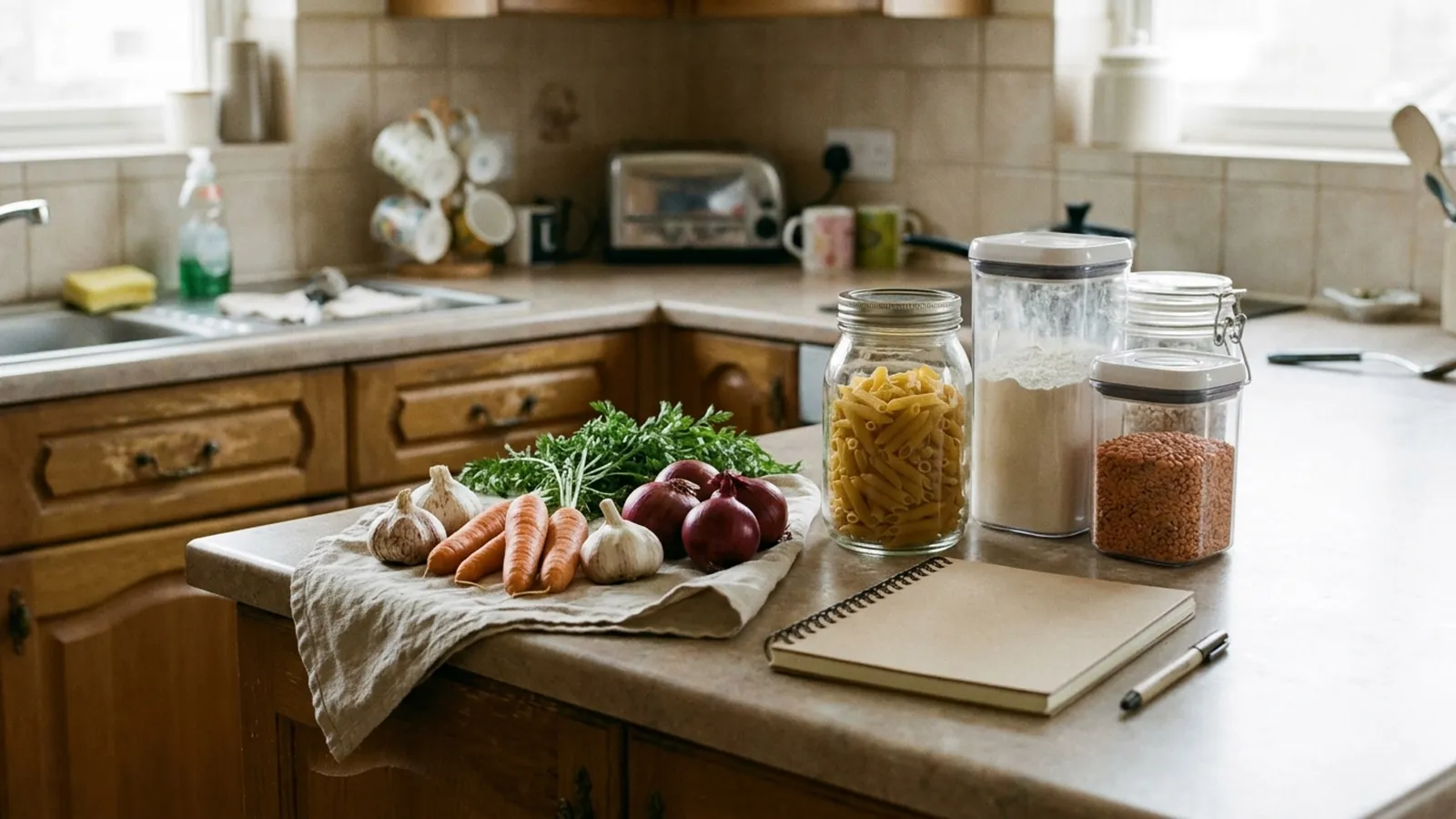
You buy food for seven dinners, then work late twice, go out on Saturday and discover a forgotten bag of vegetables on Sunday. The problem may be the schedule you shopped for.
Start your meal plan with the dinners your household already likes and the evenings people will actually be home. Then check the food you have, choose quantities and leave yourself a fallback. You can make this useful without a new recipe collection or an elaborate cooking session.
Count the meals you will actually eat at home
Take a household of two adults and one teenager. This week, all three are home Monday, Wednesday, Friday and Sunday. Only two need dinner Tuesday. Thursday is an evening out; Saturday’s arrangements are uncertain.
That is five planned home dinners, one evening out and one flexible slot. Shopping for seven full family dinners would ignore the calendar before anyone opens a cupboard.
Check breakfasts and lunches too, especially if packed lunches use the same ingredients. “We have bread” means less if tomorrow’s lunches need most of it. Note dietary needs and preferences before choosing shared ingredients; do not assume one substitution works for everyone.
Check what needs using before choosing recipes
Look through the fridge, freezer and pantry. Make a short use-first list with quantities: two portions of frozen chili, half a bag of pasta, three carrots, or a small amount of cheese. Check that food is within its safe storage period and has been handled properly; using it up is never a reason to keep questionable food.
Choose familiar meals that fit those ingredients. If the family likes tacos, pasta and baked potatoes, begin there. A recipe requiring several new ingredients can wait for an evening when someone wants to cook it.
Write quantities beside the meals rather than copying an entire recipe’s shopping list. If you already have pasta, you may need sauce ingredients and vegetables, not a second bag of everything.
Give busy evenings an easier dinner
Here is one possible week for that household. Adjust portions to appetite and dietary needs; the table is a scheduling example, not a nutrition plan.
| Day | People eating at home | Plan | What to check before shopping |
|---|---|---|---|
| Monday | Three | Pasta with vegetables | Pasta already present; buy only the remaining ingredients |
| Tuesday | Two | Previously frozen chili | Confirm there are two suitable portions; move them to the refrigerator to thaw ahead of time, never on the counter |
| Wednesday | Three | Tacos with a familiar filling | Choose quantities for that dinner and any deliberately planned lunch; raw ground meat or poultry keeps only one to two days in the refrigerator, so buy it close to Wednesday or freeze it |
| Thursday | None | Evening out | No family dinner ingredients needed |
| Friday | Three | Baked potatoes with chosen toppings | Use toppings that also fit another planned meal |
| Saturday | Uncertain | Pantry fallback if home | Keep a suitable shelf-stable option available |
| Sunday | Three | Vegetable and bean soup | Buy enough for this meal; decide storage before making extra |
Tuesday is deliberately easy. Saturday does not require a speculative fresh-food purchase. Sunday is not the destination for a cooked dish left in the fridge since Monday.
Plan storage at the same time as portions
A week on a calendar is longer than the refrigerator life of many foods. FoodSafety.gov lists raw chicken and turkey at one to two refrigerated days, and cooked meat or poultry leftovers and soups or stews at three to four days, with the refrigerator at 40°F or below. Those limits are not extended by writing a later meal on the plan. Cold food storage chart.
For perishable ingredients intended for later in the week, choose an appropriate safe freezing and thawing plan or buy them later. FoodSafety.gov advises refrigerating perishable food within two hours, or within one hour if exposed to temperatures above 90°F (32°C). Thaw meat and poultry in the refrigerator, never on the counter. Four steps to food safety. Use the official storage guidance for the actual food. This meal planner does not replace safe cooling, reheating or handling instructions.
Do not allocate the same leftovers twice. If two portions are promised for lunch, they cannot also be tomorrow’s dinner. Mark deliberately saved portions and the date, rather than trusting everyone to remember the plan.
Build the shopping list from the gaps
Group what you still need into a short list, then check quantities against the meals. An offer is useful only if the extra food has a realistic use and storage plan.
Suppose a larger pack costs less per unit but supplies twice the amount you need. Before buying it, identify the second meal or safe storage route. Otherwise you are paying more today for a possibility you have not planned.
When the list is settled, Card Calculator’s grocery-card comparison can help with the payment choice. Household Hero’s job here is to work out what needs buying. Rewards do not make an unwanted purchase necessary.
Keep the parts of the plan that work
At the next shop, ask three questions: what was eaten, what was thrown away, and which evening needed an easier option? Repeat the successful meals and adjust the awkward one.
If you want the wider explanation for a rising grocery bill, Everyday Economics looks at why grocery, rent and gas prices change differently. For the weekly routine, the useful result is simpler: enough food for the meals you expect, plus a fallback you will actually eat.
Sources
- FoodSafety.gov: cold food storage chart. Consult the food-specific guidance when planning storage.
- FoodSafety.gov: four steps to food safety, for refrigeration time limits, including hot conditions, and safe thawing.