Keep a short list of fallback meals for busy or tight weeks
How to choose, stock and rotate three to five pantry-and-freezer fallback meals so a bad week doesn't turn into takeout or an emergency shop.

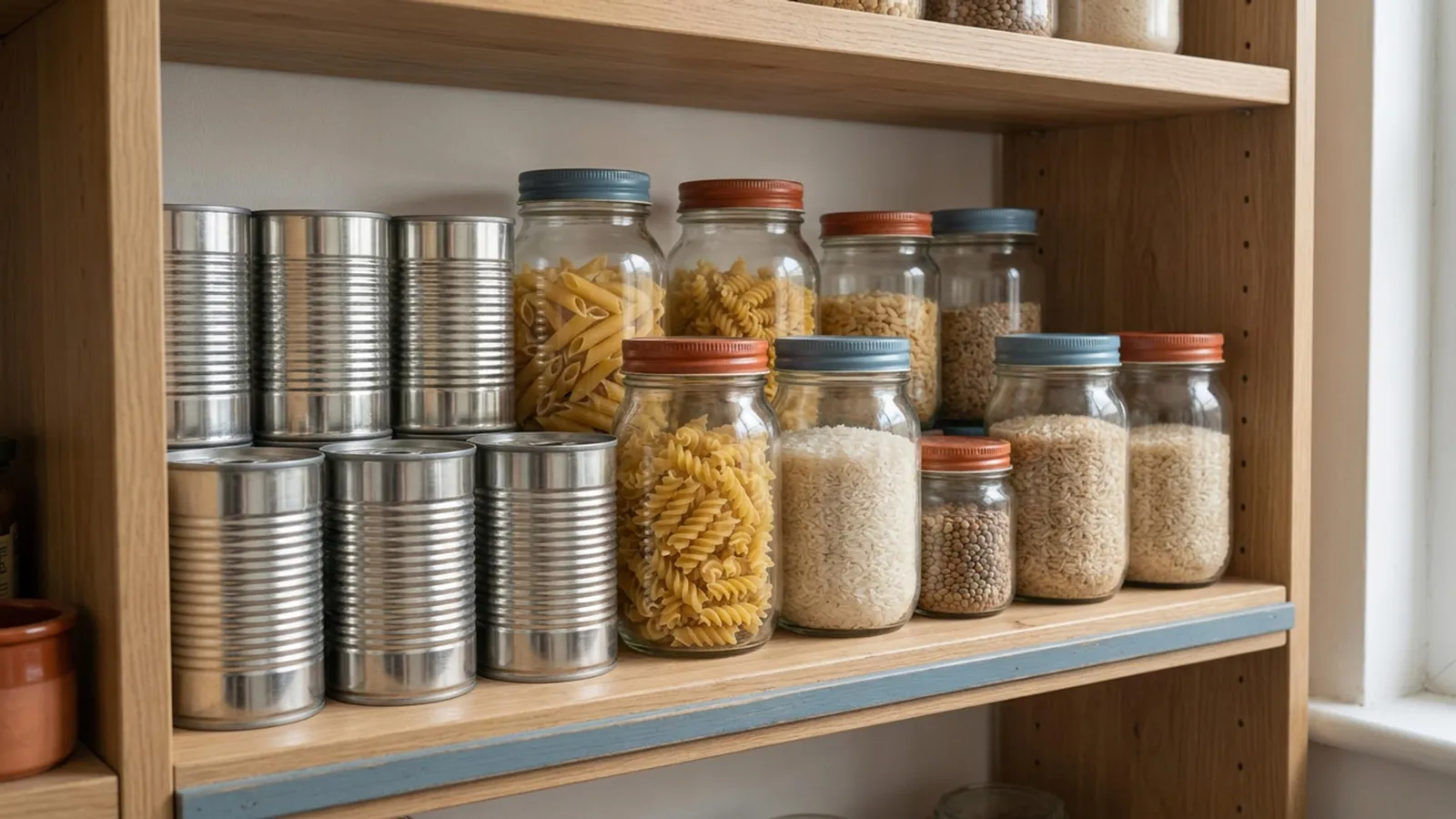
Some weeks go wrong: a late project, a sick child, an unexpected bill. The plan for the week’s dinners falls apart, and the easy fix costs more than the plan did.
A fallback list helps. It is a short set of meals your household will eat, made mostly from food that sits safely in the pantry or freezer. When the plan fails, you do not have to decide anything.
Step 1: Decide what a fallback meal has to do
A good fallback meal meets four tests. It uses ingredients that keep. It takes little time, with a rough limit you set yourself, such as 20 minutes. It needs few extra purchases. And it is something people will actually eat; a meal everyone tolerates is better than one nobody wants.
Write the tests down. They stop the list from filling up with ambitious dishes that only work on a good week.
Step 2: Choose three to five meals
Start with what your household already cooks and likes. Planning a week of meals from what your household already eats covers finding those meals. Then ask which of them could be made from shelf-stable or frozen ingredients.
An invented starter list for a household of three:
- Pasta with a jarred or home-frozen sauce and frozen vegetables
- Rice and beans with whatever frozen or canned vegetables are on hand
- Eggs on toast with a side of fruit
- Soup from the freezer, with bread
- Quesadillas or toasted sandwiches from the pantry staples
Keep it to three to five. A long list becomes another thing to manage.
Step 3: List the ingredients and set a minimum stock
Under each meal, write the ingredients and the smallest amount that makes it once for your household. Then set a “restock when below” level for each item.
For the pasta meal above, an invented minimum might be one box of pasta, one jar of sauce and one bag of frozen vegetables. If any one drops below that level, it goes on the next shopping list.
Add this check to your regular shop rather than making a special trip. The aim is to keep enough for one or two fallback dinners, not to build a stockpile. EPA warns that buying in bulk only saves money if you use everything before it spoils (EPA, checked November 18, 2026), and the same applies here.
Step 4: Use the freezer safely
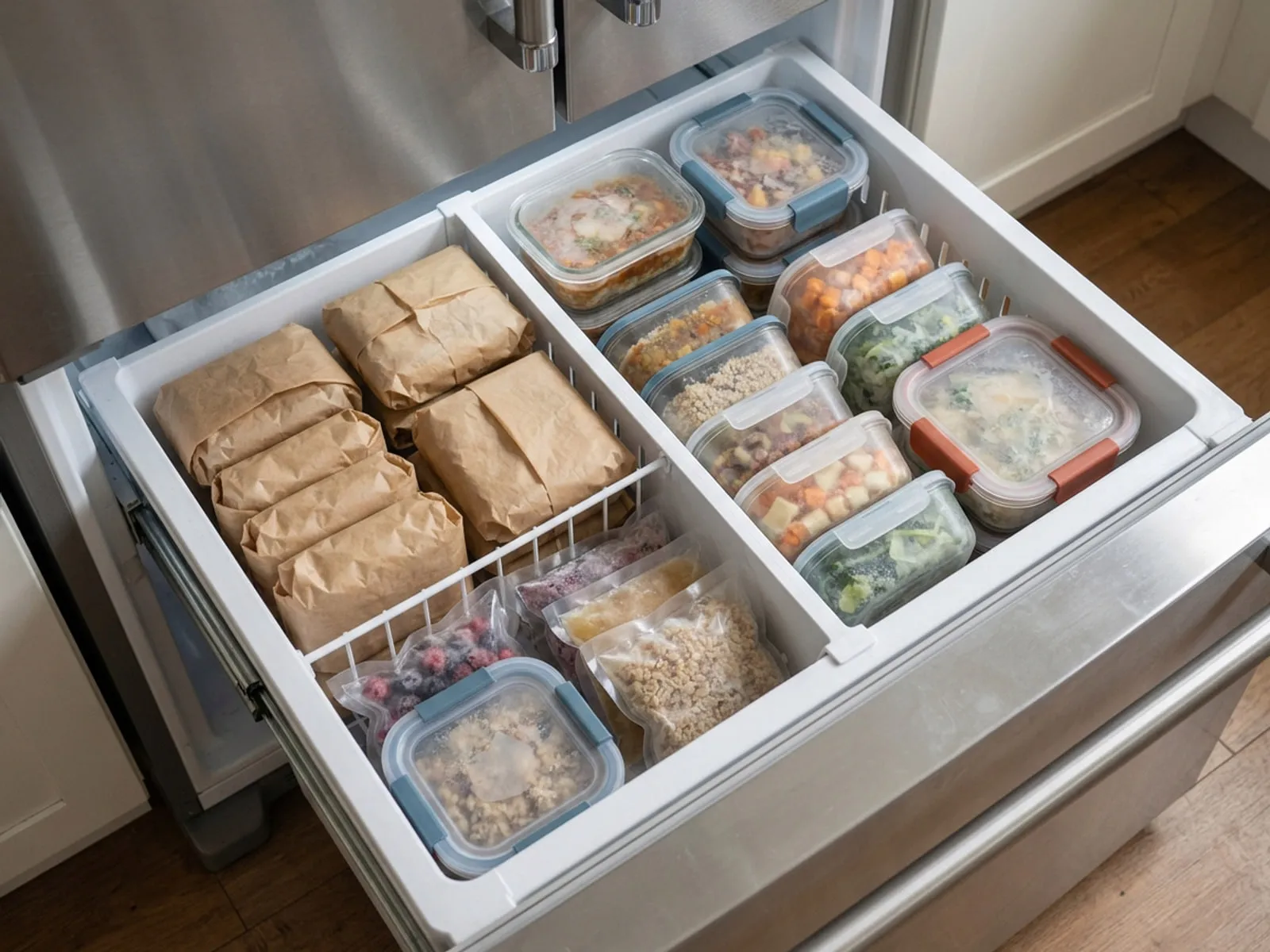
A freezer is the most flexible part of a fallback system, but only if food goes in properly and comes out safely.
FoodSafety.gov says frozen food kept continuously at 0°F (-18°C) or below can be kept indefinitely, and that its freezer storage times are for quality only (FoodSafety.gov, checked November 18, 2026). The same chart lists refrigerator storage at 40°F (4°C) or below. Quality still matters for a fallback meal you want to enjoy, so rotate stock.
The chart gives these examples for quality in the freezer:
| Food | Refrigerator (40°F or below) | Freezer (0°F or below) |
|---|---|---|
| Soups and stews | 3 to 4 days | 2 to 3 months |
| Cooked meat or poultry leftovers | 3 to 4 days | 2 to 6 months |
| Ground meat and ground poultry | 1 to 2 days | 3 to 4 months |
| Pizza | 3 to 4 days | 1 to 2 months |
Egg, chicken, ham, tuna and macaroni salads are listed as not freezing well. The chart also points to FoodSafety.gov’s FoodKeeper tool for storage tips on over 650 foods and beverages.
Freeze leftovers and soups in single-meal containers, so you thaw only what you need. Label each with the contents and the date. EPA also recommends putting leftovers in clear, labeled containers with dates, and freezing food you know will not be eaten in time (EPA, checked November 18, 2026). Thaw in the refrigerator rather than on the counter, and for the full rules check FoodSafety.gov. Batch cooking for your real schedule covers portions and freezer space.
If the power goes out, do not guess about the food. Check FoodSafety.gov’s guidance on power outages before eating anything that has thawed.
Step 5: Store the list where you will see it
Put the list on the inside of a cupboard door or in a note on your phone, with the ingredient minimums beneath each meal. Mention it to everyone who cooks. On a bad evening, the person who gets home first should be able to pick a meal without thinking.
Add a date next to freezer items and glance at the freezer when you write the shopping list. Use the oldest portions first.
Step 6: Review after a busy week
After you use a fallback, note what worked. Was the meal quick enough? Did anyone refuse it? Was something missing from the stock? Replace the weakest meal and keep the rest.
Also check whether fallbacks are being used too often. If you reach for them three nights a week, the main plan may be too ambitious. A lighter weekly plan, with more planned leftovers, may suit your calendar better.
Where money comes in
A fallback list can reduce impulse takeout, but it is a logistics tool, not a budget. For how to plan spending and cut costs, see Money Master (moneymaster.fyi). Which card to use for groceries is covered by Card Calculator (cardcalculator.net). Do not borrow or overspend to build a pantry; start with a small amount of stock and add gradually.
Common questions
How many fallback meals do I need? Three to five is enough for most households.
Do they have to be healthy? That is up to your household’s needs. A fallback is meant for a short stretch, but check with a health professional if you have dietary requirements.
How long can the pantry items last? It depends on the product. Check the label and the manufacturer’s guidance.
Can I refreeze thawed food? The answer depends on how it was thawed and handled. Check FoodSafety.gov before refreezing.
Sources checked November 18, 2026: FoodSafety.gov, Cold Food Storage Chart; EPA, Preventing Wasted Food at Home.