Batch cook for your real schedule, freezer space and appetite
A small batch-cooking plan with portions, safe cooling and storage, freezer space and a realistic reheating route.

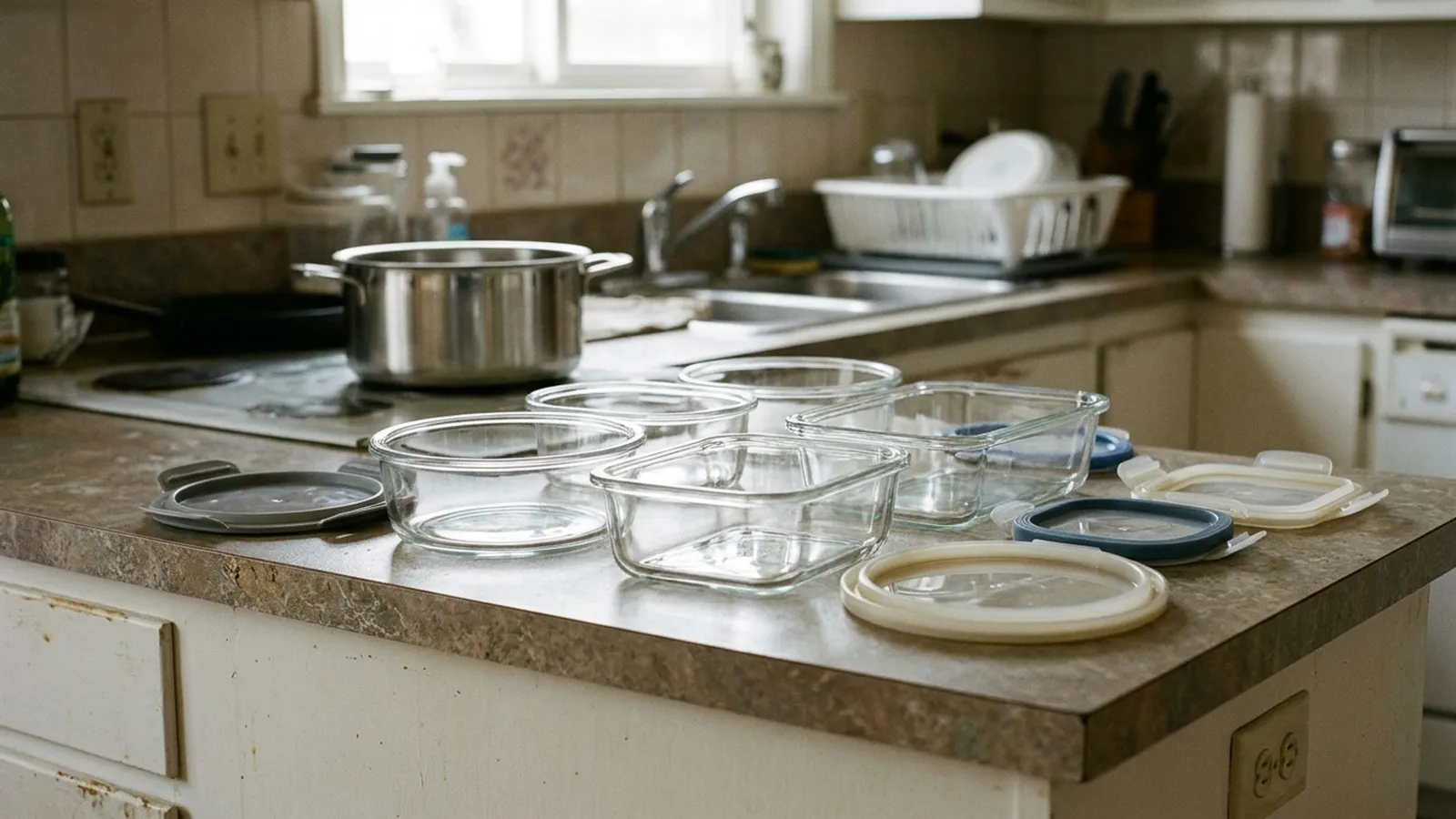
Cooking more at once can make Wednesday easier. It can also leave you with six containers nobody wants, nowhere to put them and a Sunday cooking session that feels like a second job.
Start with one familiar dish and the meals it will actually supply. Decide portions, storage and reheating before increasing the recipe. A small batch that gets eaten is a better first test than a week’s worth of dinners cooked on a hopeful schedule.
Count people and portions before ingredients
Suppose three people want chili on Sunday and two people want it again on Tuesday. You also want one future dinner for two. That is seven portions: three now, two refrigerated for Tuesday and two frozen for later.
Choose a recipe you know and quantities that match your household’s appetite. “One portion” is your planning unit, not a universal container size or nutrition recommendation. Check dietary needs before assuming everyone will eat the same batch.
If you are unsure which nights people will be home, begin with the flexible weekly meal plan. Batch cooking supplies that plan; it does not create a reason to eat at home every night.
Check storage space before increasing the recipe
Find the containers, fridge space and freezer space first. Make sure you can store the planned quantity safely rather than discovering that the freezer is already full after cooking.
A simple allocation for the seven-portion example looks like this:
| Destination | Portions | Planned use | What to decide now |
|---|---|---|---|
| Sunday dinner | Three | Eat after cooking | Serve appropriately; do not leave the remaining batch out through the evening |
| Refrigerator | Two | Tuesday dinner | Record the cooking date and planned use |
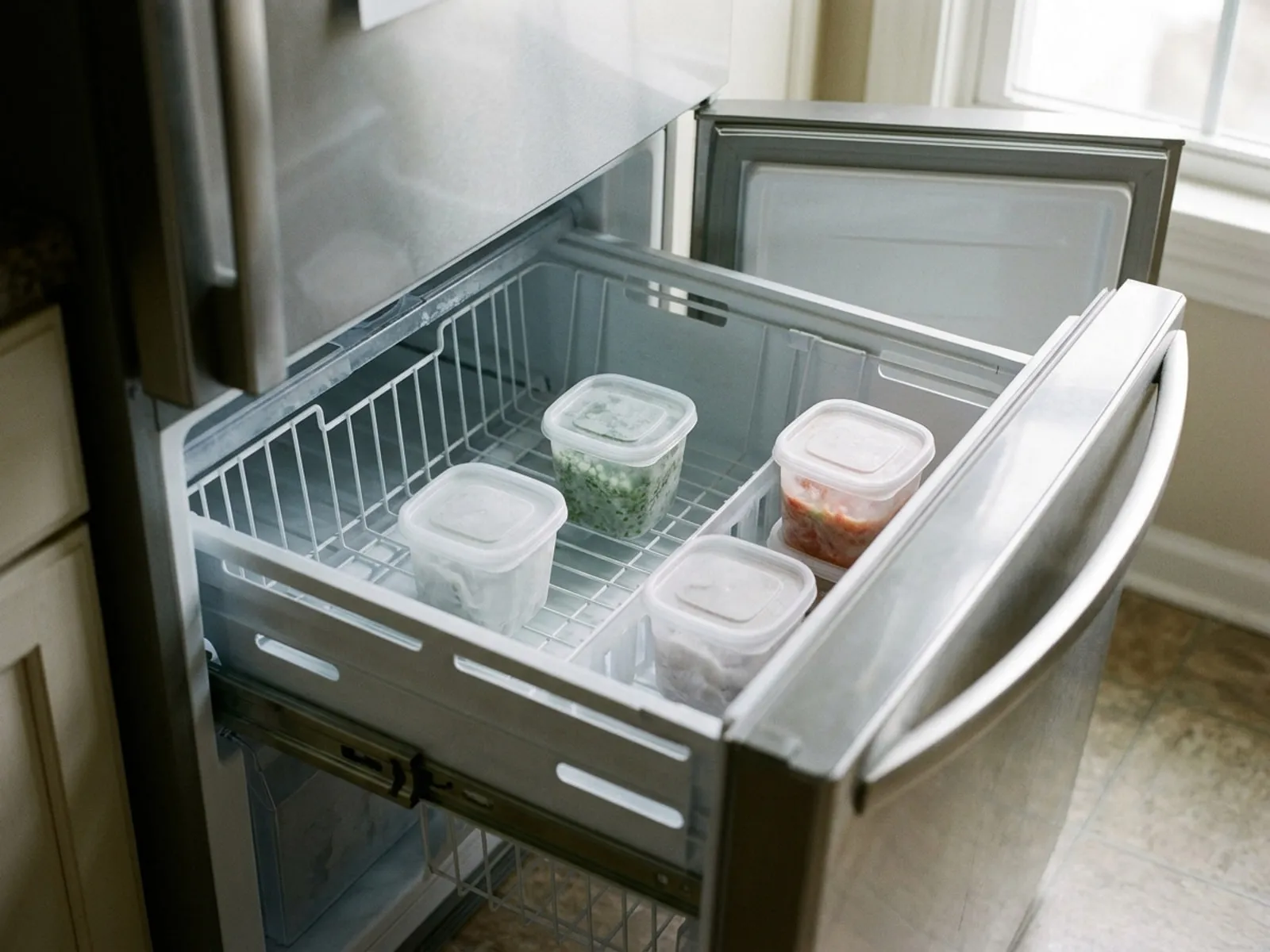
| Freezer | Two | A later dinner | Label the contents, date and quantity; plan a safe thawing route |
These numbers are an invented household schedule. They do not extend a food’s storage life or make an unsafe cooling method acceptable.
Cook, cool and store as separate steps
Follow a suitable recipe and verify the safe cooking temperature for the actual ingredients with a food thermometer. FoodSafety.gov’s chart lists all poultry, including ground chicken and turkey, at 165°F; ground beef, pork, veal and lamb at 160°F; and leftovers when reheated at 165°F. Different foods have different requirements; use the chart rather than one temperature for everything. Safe minimum internal temperatures.
FoodSafety.gov advises shallow containers for leftovers and prompt refrigeration. Perishable food should not stay out longer than two hours, or one hour if exposed to temperatures above 90°F. Keep the refrigerator at 40°F or below and freezer at 0°F or below. Thaw in the refrigerator, not on the counter. Four steps to food safety.
Do not leave a large pot on the counter until it feels completely cold. Arrange smaller, shallow containers and prompt refrigeration as part of the cooking session. If you cannot safely handle and store the quantity, reduce the batch.
Give each stored portion a real destination
The official cold-storage chart lists soups and stews and cooked meat or poultry leftovers at three to four refrigerated days. A Sunday-to-Tuesday plan fits within that period if the food was cooked, cooled and stored safely; Sunday-to-Friday refrigerated chili does not. Freeze portions intended beyond the appropriate refrigerated period rather than treating a seven-day planner as a storage rule. The same chart explains that properly handled food kept continuously frozen at 0°F or below can be kept indefinitely; its two-to-three-month freezer guideline for soups and stews concerns quality. This assumes the food was safe when frozen and remained frozen, not that freezing repairs earlier mishandling. Cold food storage chart.
Label the date and planned use. If somebody takes Tuesday’s portions for lunch, update the plan. A labelled container is helpful only if the schedule reflects what remains.
Freezing does not repair earlier unsafe handling. If you do not know how long food was left out, do not use a later freezer date as proof that it is safe.
Plan the second meal before the first session ends
For the future frozen dinner, choose when it will move into the refrigerator to thaw and allow enough time for the quantity. Keep the portions protected from contamination, follow the relevant thawing guidance and reheat leftovers to the verified temperature.
In a microwave, follow applicable instructions, stir or rotate as appropriate and check that the food is heated throughout. The thermometer, rather than steam from one corner, checks the temperature. Follow any standing time stated on the package for commercially prepared food. The official four-step guide explains why uneven microwave heating needs attention.
This guide covers an ordinary short-term household batch. It does not teach home canning, vacuum-packed long storage, sous-vide preservation or a specialized diet.
Review the effort as well as the leftovers
After a week, note how much was eaten, how long the session took and whether the second meal was welcome. If two portions remained untouched, make less next time or freeze an appropriate amount sooner. You do not have to prepare every component on the same day.
Decide what to buy before choosing how to pay. Card Calculator’s grocery-card guide handles the card decision; Money Master’s budget-method guide handles the spending plan. The useful household outcome here is fewer last-minute decisions with food that has been handled safely.