Test your smoke and carbon monoxide alarms: placement, testing and replacement dates
Where smoke and carbon monoxide alarms belong, how often to test them, when to replace batteries and whole units, and what renters and owners should each check.

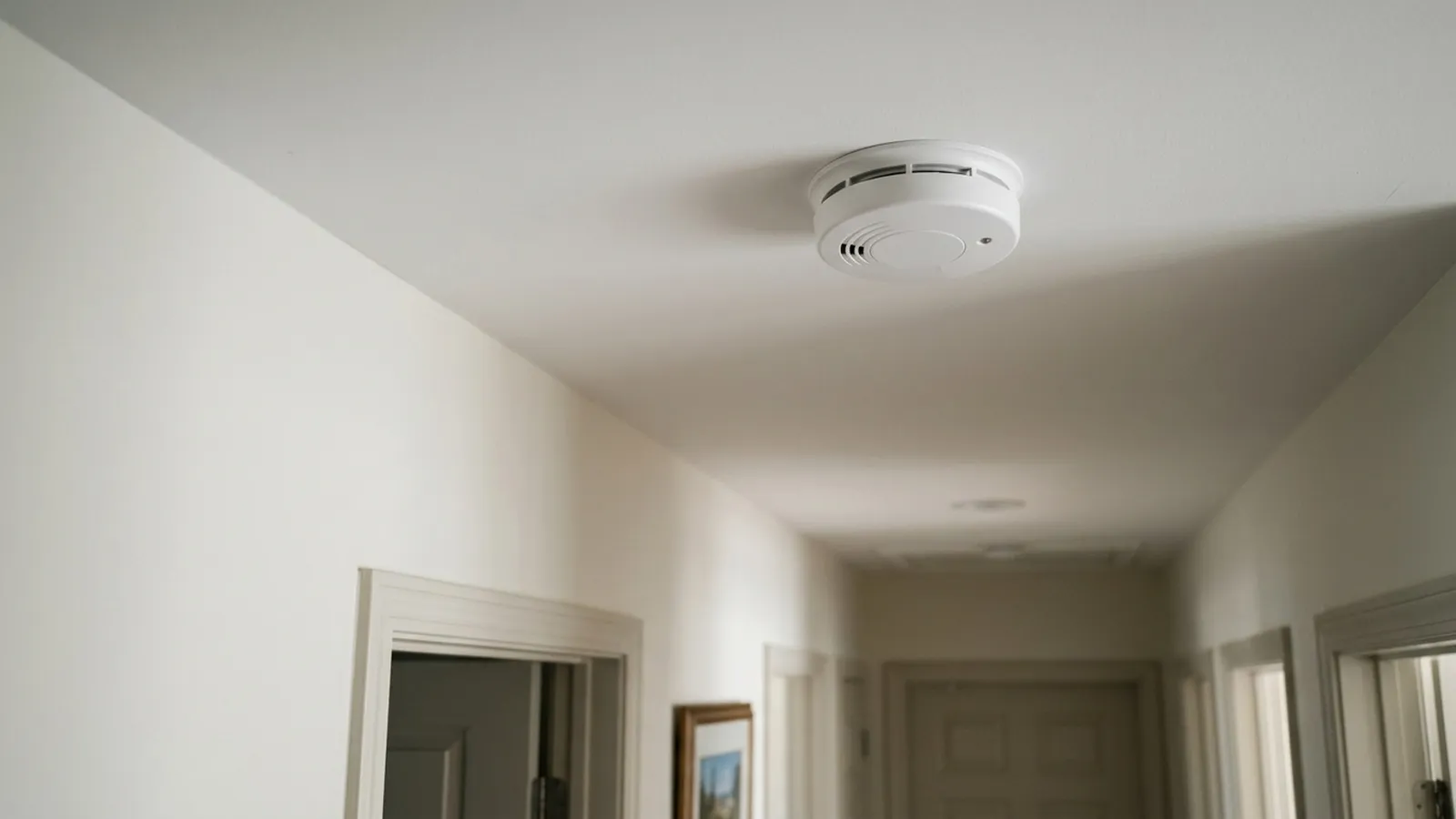
Smoke and carbon monoxide alarms are the cheapest safety equipment in most homes, and the easiest to forget. They sit on the ceiling, they work silently for years, and the only time many households think about them is when one starts chirping at 3 a.m.
This guide covers where each alarm belongs, what testing involves, which dates to write down, and who is usually responsible in a rental versus a home you own. Local codes vary, so it ends with the one call that settles your own requirements.
Where smoke alarms go
The U.S. Fire Administration says to put smoke alarms inside and outside each bedroom and sleeping area, and on every level of the home, including the basement. Alarms are mounted on the ceiling or high on a wall, following the manufacturer’s instructions (USFA smoke alarms, checked November 18, 2026). Ready.gov gives the same every-floor advice and adds that you should never switch off a smoke alarm while cooking (Ready.gov home fires, checked November 18, 2026).
NFPA gives matching advice: alarms in every sleeping room, outside each separate sleeping area and on every level including the basement, and interconnected alarms where possible (NFPA smoke alarms, checked November 18, 2026).
USFA also recommends interconnected alarms, so that when one sounds, they all sound. In a two-story home that matters: a fire in the basement should wake someone in a bedroom upstairs. Hardwired alarms should be installed by a qualified electrician, according to the same USFA page.
Where carbon monoxide alarms go
The Consumer Product Safety Commission (CPSC) says to install battery-operated carbon monoxide (CO) alarms, or alarms with battery backup, on every level of the home and outside sleeping areas. Interconnected alarms are preferred. Keep them away from heating vents and places where furniture or draperies could block them. CPSC does not recommend putting them in kitchens or directly above fuel-burning appliances (CPSC carbon monoxide questions and answers, checked November 18, 2026).
Ready.gov describes carbon monoxide as a colorless, odorless gas that can kill (Ready.gov winter weather, checked November 18, 2026). CPSC lists headache, dizziness, weakness, nausea, vomiting, sleepiness and confusion as symptoms of poisoning (CPSC carbon monoxide information center, checked November 18, 2026). NFPA notes that CO poisoning can be confused with flu or food poisoning, so an alarm is the dependable warning. It also advises choosing a CO alarm labeled by a recognized testing laboratory, and calling your local fire department’s non-emergency number ahead of time to learn what number to call if an alarm sounds (NFPA carbon monoxide safety, checked November 18, 2026). If a CO alarm’s trouble signal sounds, NFPA says to check for low batteries, replace them, and call the fire department if it still sounds.
Test them on a schedule
For smoke alarms, USFA says to test all of them monthly, whatever the type; NFPA says at least once a month, pressing the test button. A practical way is to pick a date you will remember, such as the first Saturday of the month, and press the test button on each alarm. If you have interconnected units, one press should sound them all; confirm that they do.
For CO alarms, NFPA says to test at least once a month and replace them according to the manufacturer’s instructions, and CPSC says to follow the manufacturer’s instructions. Because CO alarms have a recommended replacement age, check the manufacturer’s literature for yours rather than assuming a passing test means the alarm is still within its life.
Batteries and replacement dates
USFA gives these intervals for smoke alarms (checked November 18, 2026):
- 9-volt battery alarms: replace the battery at least once a year.
- Hardwired alarms: replace the backup battery at least once a year.
- Long-life alarms with a sealed 10-year battery: the battery cannot be replaced, so replace the whole alarm according to the manufacturer’s instructions.
- Whole alarm: replace 9-volt and hardwired alarms 10 years from the manufacture date.
Ready.gov takes a slightly different line on batteries, saying to replace them twice a year unless the alarm uses a 10-year lithium battery. Both agree on the 10-year unit. If you want a single easy habit, changing batteries when the clocks change satisfies the stricter of the two, but the minimum USFA states is once a year.
USFA counts the 10 years from the manufacture date, not the installation date. Look for the date on the alarm itself or in its manual, and write it in your records. CPSC says CO alarms also have a recommended replacement age but does not give a number of years on that page; look for it in the product literature or ask the manufacturer.
Alarms come in two basic sensing types, ionization and photoelectric, which detect different kinds of fire. USFA recommends either both types in every home and sleeping area, or dual-sensor alarms. If you have to replace alarms anyway, check which type you have, and look for strobe or vibration features if anyone in the home has hearing loss.
What to do when a CO alarm sounds
CPSC’s instruction is direct. Never ignore the alarm and do not try to find the source. Get outside to fresh air immediately, call 911 or the fire department, then count heads. Do not go back in until responders say it is safe, and do not run any suspect appliance until trained personnel have serviced it. If the alarm sounds again within 24 hours of your return, repeat the steps and have a qualified technician inspect all fuel-burning equipment (CPSC, checked November 18, 2026).
CPSC also recommends having a heating system professionally inspected every year, and warns against heating a home with a gas range or oven. These are professional or avoid-entirely jobs, not weekend repairs.
Renters and owners
If you own, the whole job is yours: placement, testing, batteries and replacement. Add each alarm’s manufacture date to your maintenance calendar (see how to build one).
If you rent, responsibility depends on your lease and local law. USFA’s page addresses homeowners and landlords together and says nothing specific to tenants, so do not assume either way. Ask the landlord or manager three questions in writing: who tests and replaces alarms, how to report a fault, and whether the building has CO alarms. CPSC notes that many states and local jurisdictions now require CO alarms in residences and suggests asking your local building code official about your area. Do not remove an alarm to stop a chirp; report it.
A short alarm routine
Once a month, test every alarm. Once a year, change batteries where they are replaceable, and note any alarm approaching ten years from its manufacture date. When you replace one, record the new date.
Fire and CO events can also lead to insurance claims, and what a policy requires of you is worth knowing in advance; see identify the policy your household needs to read. If a recurring checklist feels like too much to hold in your head, this guide covers how to hand reminders to a system.
Common questions
Can I silence an alarm that goes off while I cook? Ready.gov says never to turn off a smoke alarm while cooking. If cooking sets it off often, ask a pro about placement or the alarm type rather than disabling it.
Do I need both smoke and CO alarms? They detect different hazards. Combination units exist; check their listed replacement ages.
How do I know if my alarm is too old? Find the manufacture date on the unit. If you cannot find one, replacing it is the safe default.
Who installs hardwired alarms? USFA says qualified electricians only.
Sources checked November 18, 2026: USFA smoke alarms; Ready.gov home fires; CPSC carbon monoxide questions and answers; CPSC carbon monoxide information center. NFPA smoke alarms; NFPA carbon monoxide safety. This is general information, not professional advice.