Compare groceries by unit price and the amount you will actually use
The big pack is not always cheaper per ounce, and it is never cheaper if part of it is thrown away. How to read unit prices and allow for what your household will use.

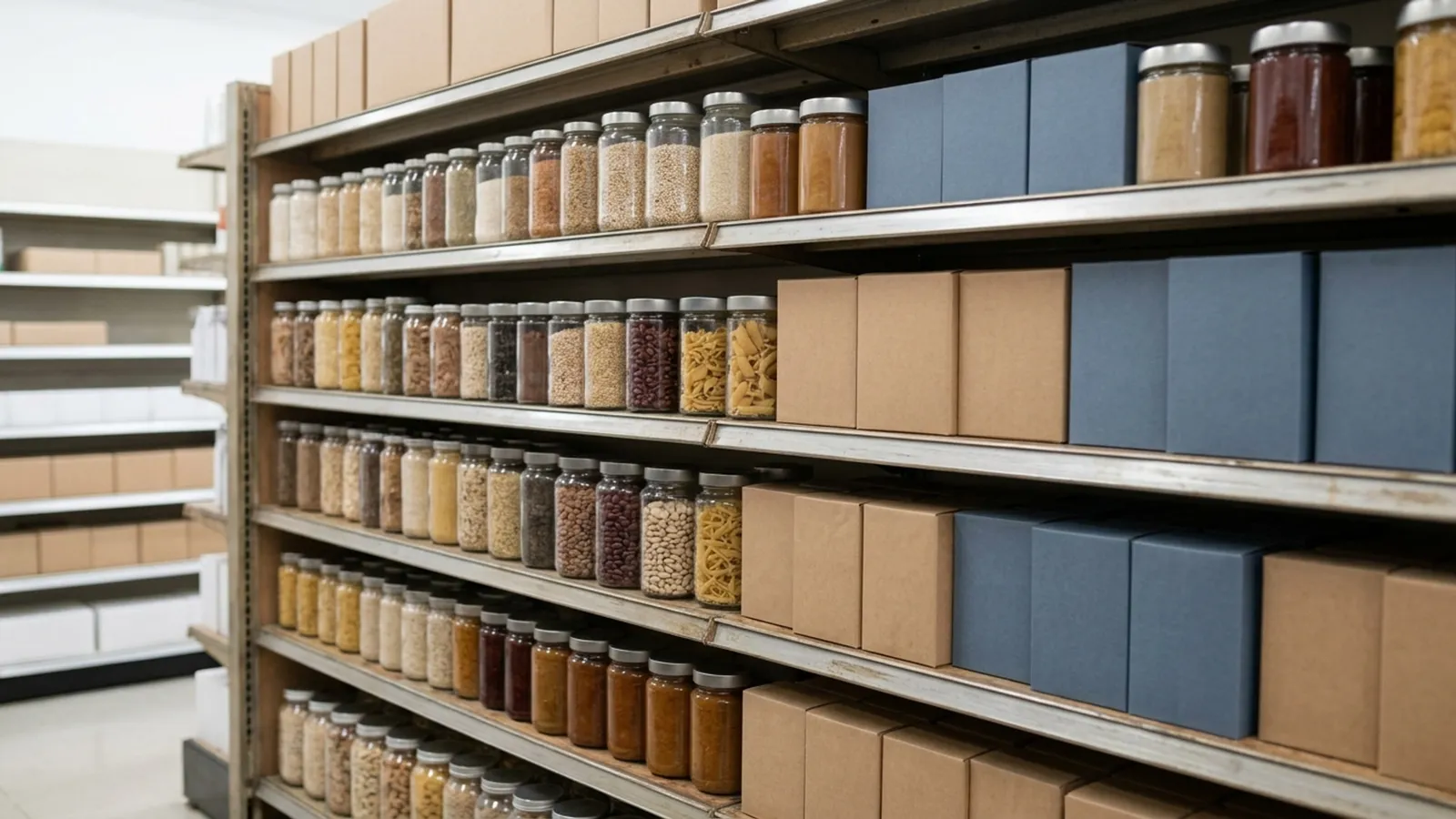
The family pack is on the shelf next to the regular size. It looks like a better deal, and often it is. Sometimes it is not, and sometimes the saving disappears in the back of the refrigerator.
This guide shows how to read a unit price, compare two packages fairly, and adjust for what your household will actually eat.
Step 1: Find the unit price
NIST describes unit pricing as the cost per unit of measure, such as price per ounce, gram or liter. Shelf labels typically show the product name and size, the total price, the unit price and other information, on paper or digital tags and on many online stores (NIST, Uniform Unit Pricing, checked November 18, 2026).
NIST says consumers can use unit prices to compare value between similar products. It also notes that current label designs are “not perfect,” though they still let shoppers make informed choices.
Step 2: Check that the units match
Two products can show different units: one in ounces, the other in pounds, or one by weight and one by count. NIST notes that its handbook allows stores to show unit prices in metric units, so you may see grams or liters on some tags.
When the units differ, do the arithmetic yourself. NIST says unit prices can be calculated with basic arithmetic: divide the total price by the quantity.
An invented example: a 12-ounce jar costs $3.60 and a 36-ounce jar costs $9.90.
- 12-ounce jar: $3.60 divided by 12 is $0.30 per ounce.
- 36-ounce jar: $9.90 divided by 36 is $0.275 per ounce.
On paper the large jar is cheaper by 2.5 cents per ounce, about 8 percent. These prices are made up to show the method; they are not current prices anywhere.
Step 3: Don’t assume a store provides it
NIST says unit pricing rules apply only when stores voluntarily provide unit prices, and that the model regulation has never included a mandatory federal provision. It reports that 19 states and two territories have unit pricing laws or regulations, and that eleven jurisdictions have mandatory provisions: Connecticut, Maryland, Massachusetts, New Hampshire, New Jersey, New York, Oregon, Rhode Island, Vermont, Puerto Rico and the Virgin Islands. Check NIST’s handbook if you want to know whether your state is on the list.
In practice, some stores show unit prices on every tag and some do not, and the label may be missing, small or in a different unit from the product beside it. If the tag is absent, take the total price and size from the package and calculate it yourself. A phone calculator is enough.
Step 4: Allow for what you will actually use
Unit price assumes you use everything you buy. USDA says consumers contribute to food loss when they buy or cook more than they need and throw out the extras. It estimates US food waste at 30 to 40 percent of the food supply, based on a figure of 31 percent loss at the retail and consumer levels in 2010 (USDA, Food Waste FAQs, checked November 18, 2026). That is a national estimate from 2010, not a figure for your kitchen, but it explains why a cheaper unit price does not settle the question.
Return to the jars. Suppose your household uses about 24 ounces before the contents spoil or go stale (an invented assumption).
- Buy two 12-ounce jars: $7.20 for 24 ounces used, which is $0.30 per ounce.
- Buy one 36-ounce jar: $9.90, but only 24 ounces are used. $9.90 divided by 24 is $0.4125 per ounce of food eaten.
The jar with the lower shelf price per ounce costs about 37.5 percent more per ounce you actually eat. Check: $0.4125 minus $0.30 is $0.1125, and $0.1125 divided by $0.30 is 0.375. If you would eat all 36 ounces, the large jar wins. The question is what you will use, not what the label says.
Step 5: Ask four questions before choosing the big pack
- Will we use all of it before it spoils or loses quality? Think about the date on the package and how you store it.
- Do we have room to store it, in the pantry, refrigerator or freezer?
- Are we likely to eat more of it just because it is there?
- Does it fit what we cook? If the plan for the week does not call for it, a bargain is still an extra item. Our guide to planning a week of meals makes this easier.
Freezing can change the answer for some foods. If the household cooks ahead, see batch cooking for your real schedule, freezer space and appetite. How long any particular food keeps in the freezer, and what is safe, is a question for USDA’s food safety guidance rather than this guide.
Step 6: Watch for shrinking packages
NIST says unit prices help shoppers spot shrinkflation, where the contents shrink while the price stays the same. Its example is ice cream moving from 1.5 quarts to 1.44 quarts in the same price range. If a favorite item seems to cost the same but looks smaller, compare the unit price with what you remember or with a photo of an earlier receipt.
Step 7: Keep a simple record
For items you buy every week, a note with the store, size and unit price takes a minute and shows whether a deal is real. Over a few trips you will know the usual price of staples and can recognize a sale.
This guide covers how to compare. For ways to pay less on the grocery bill, and for budgeting, see Money Master. For which card to use at the store, see Card Calculator.
Common questions
Is bulk always cheaper per unit? No. It is often cheaper, and the unit price will show you, but a larger package can cost more per unit, and any package costs more per unit eaten if part is wasted.
What if the unit prices are in different units? Convert to a common unit yourself, dividing the price by the quantity in the same unit.
Does unit price tell me which product is better? No. It compares price for quantity, not quality, ingredients or fit with your household’s needs.
Sources checked November 18, 2026: NIST, Uniform Unit Pricing: Tools for Consumers; USDA, Food Waste FAQs. All prices in examples are invented.