Build a grocery price book for the items you buy again
A short price book for twenty or so repeat purchases, using unit prices and your own usage, so you can tell a real bargain from a big pack you won't finish.

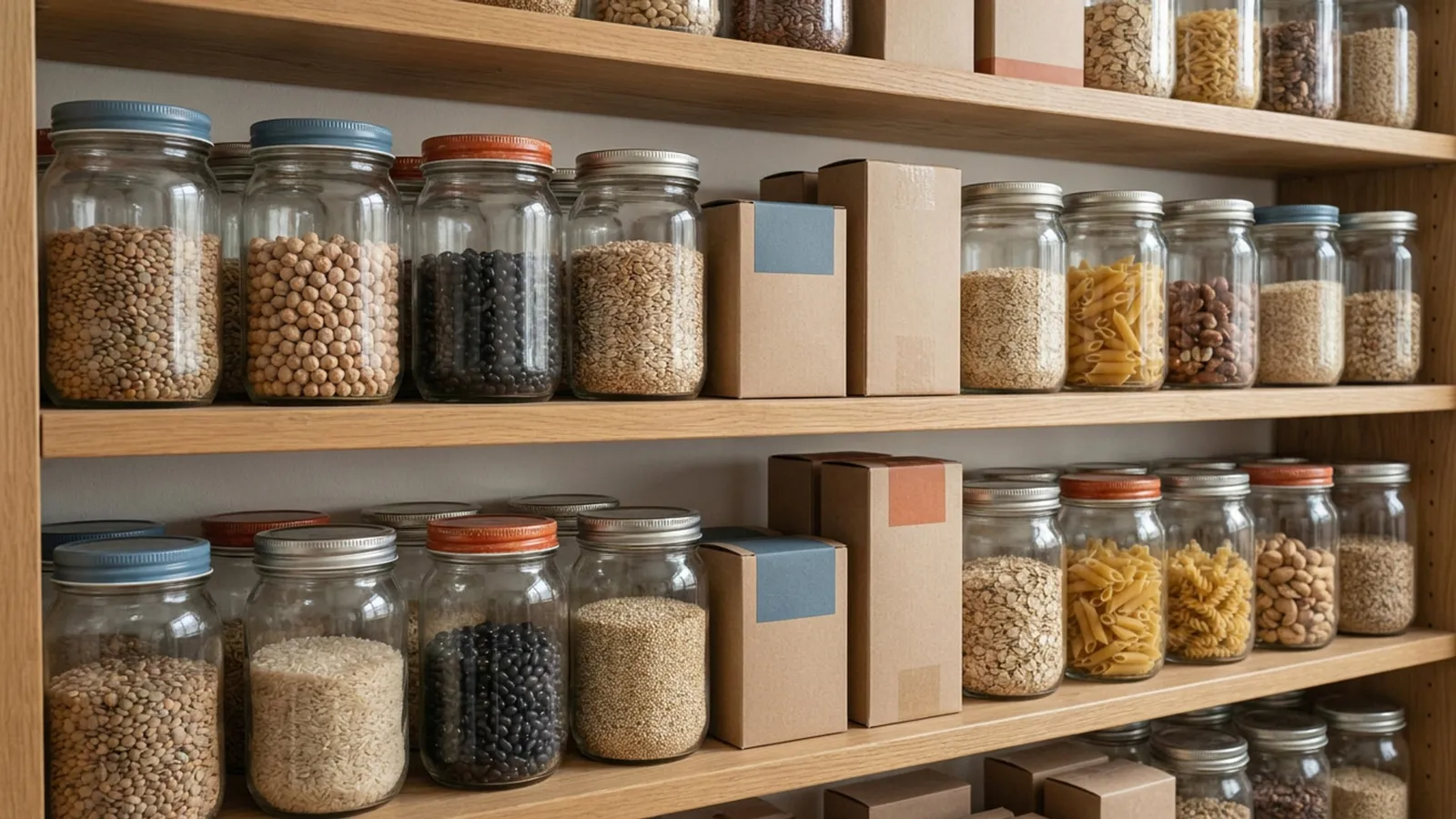
Grocery prices move, and stores present them in ways that are hard to compare. A larger pack looks cheaper but may not be. A sale price may be your normal price somewhere else.
A price book is a small record of what you pay for the items you buy again and again. You do not track everything. You track a short list, in a form that lets you compare, and you use it to notice a good price when it appears.
Step 1: Choose twenty items, not the whole shop
Start with the things you buy at least monthly and that come in more than one size or at more than one store: staples such as rice, oats, coffee, cooking oil, eggs, cheese, canned tomatoes, frozen vegetables and a household protein.
Skip rare purchases, fresh produce that changes by season and anything you buy once a year. A list of 15 to 25 items is manageable. A list of 150 will be abandoned.
Use the meals you cook most. Planning from what your household already eats can help identify them.
Step 2: Set up columns for a like-for-like comparison
A spreadsheet works, and so does a notebook. For each entry, record:
- Date
- Store
- Item and brand (or “store brand”)
- Package size and unit (ounces, pounds, count)
- Price paid
- Unit price (price divided by size)
- Notes: sale, coupon, loyalty price, multi-buy
Record the shelf price you actually paid, not an advertised price you did not get. If a loyalty-card price applies, note that it needs the card. Keep sale entries clearly marked so they do not distort your baseline.
Use one unit for each item. Many stores show a unit price on the shelf tag, but the unit can differ between brands or sizes, such as price per ounce on one tag and per pound on another. Check the unit before comparing, and do the division yourself when in doubt. Unit-price labeling rules vary by state and store, so do not assume every shelf tag follows the same convention.
Step 3: Work out the unit price
The formula is price divided by quantity. Here is an invented example for rolled oats, with made-up prices.
| Option | Size | Price | Unit price |
|---|---|---|---|
| Store A, small canister | 18 oz | $3.60 | $0.20 per oz |
| Store B, medium bag | 42 oz | $8.82 | $0.21 per oz |
| Warehouse club, large bag | 144 oz (9 lb) | $27.36 | $0.19 per oz |
The medium bag costs more per ounce than the small canister, even though it is bigger. The large bag is cheapest per ounce, by a cent.
Now bring in how much your household uses. Suppose the household eats 12 oz a week. The 144 oz bag lasts 12 weeks. At $0.19 per oz that is $2.28 a week, against $2.40 a week at $0.20 per oz. The difference is $0.12 a week, or $1.44 across the 12 weeks ($28.80 for the same oats at the canister’s unit price, against $27.36).
That is a small saving, and it assumes the oats stay fresh and the household has somewhere to keep nine pounds. EPA notes that buying in bulk only saves money if you use everything before it spoils (EPA, checked November 18, 2026). For a perishable item, that condition matters more than the unit price.
Step 4: Record a baseline and a “buy” price
After a few shops, you will have several prices per item. Pick two numbers for each:
- A baseline: the typical unit price you pay.
- A trigger: a unit price low enough that you would stock up, within what you can store and use.
For the oats, an invented baseline might be $0.20 per oz and a trigger of $0.17. A shelf price below the trigger is a signal to buy an extra pack. A price above the baseline is a reason to buy only what you need this week.
Be cautious with triggers on perishable food. A cheap unit price is only a bargain for food you finish. For meat, dairy and anything that is stored cold, check safe storage times before stocking up; FoodSafety.gov’s chart lists refrigerator and freezer times by food (FoodSafety.gov, checked November 18, 2026).
Step 5: Keep the book up to date with little effort
You do not need to enter every shop. Update the book when you notice a price that surprises you, when you try a new store and when a regular item’s price changes by more than you expected. A photo of the shelf tag, saved to a folder, can be entered later.
Review it every few months. Drop items you no longer buy and add new ones. A price book is a living list, and keeping it small is the whole trick.
Step 6: Put prices in context
Your own record shows what you pay. It does not tell you whether prices in general are rising. For that, USDA’s Economic Research Service covers food prices: it describes the consumer price index for food as tracking changes in retail food prices, and it updates food price forecasts for up to 18 months in the future through its Food Price Outlook (USDA ERS, checked November 18, 2026). Use these to put your own record in context, not to replace it; forecasts are national and may not reflect your store or region.
For an explanation of why food prices rise and fall differently from other household costs, see Everyday Economics (economicsexplained.net).
What a price book can’t do
It cannot tell you which store is cheapest overall; that depends on your whole basket, travel time and what you value. It does not account for quality differences between brands. And it does not replace a household budget: for budgeting and ways to pay less, see Money Master (moneymaster.fyi). For which card to use at the checkout, see Card Calculator (cardcalculator.net).
Keep the book alongside your other household records; running a household without keeping every detail in your head covers where to put them.
Common questions
Is bulk always cheaper? No. The unit price may be higher, and you may not use it all. Compare unit prices and think about storage.
Do store brands belong in the book? Yes. Record them as their own entries so you can compare them with name brands on the same unit.
Should I include tax? Sales tax rules on groceries can differ by state. Be consistent: record shelf prices, and treat tax the same way every time.
How often should I update it? Whenever a price surprises you, and a quick review every few months.
Sources checked November 18, 2026: EPA, Preventing Wasted Food at Home; FoodSafety.gov, Cold Food Storage Chart; USDA ERS, Food Markets and Prices.