Keep an appliance register: models, warranties, manuals and recall checks
A one-page register of your appliances, with model numbers, warranty dates and a yearly recall check, so a breakdown or a safety notice does not start with a search for paperwork.


When the dishwasher stops mid-cycle, the useful questions arrive all at once. What model is it? Is it still under warranty? Where is the manual? Was there ever a recall? Answering them from memory rarely works, and finding the paperwork can take longer than the repair.
An appliance register is a single page that holds those answers in advance. It takes an hour to build and a few minutes a year to keep current.
What to record for each appliance
Start with the large items that are expensive to replace or that carry a safety risk: refrigerator, range or cooktop, oven, dishwasher, washer, dryer, water heater, furnace or air conditioner, and any freezer. Add smaller items you would want recall notices for, such as a space heater, air fryer or electric kettle.
For each one, write down the following:
- The brand, product name and the full model number, plus the serial number. Both are usually on a rating plate. Common spots are inside the door frame, on the back panel, behind the kick plate or on the side of the unit. Photograph the plate as well as typing it out, because digits are easy to mistype.
- The purchase date and where you bought it. If you moved into a home with the appliance already installed, write “inherited” and the move-in date.
- The warranty start date, the length of coverage and the name of the company that stands behind it.
- Where the manual lives: a paper folder, a saved PDF or a link to the manufacturer’s support page.
- The service phone number and, once you have used one, the name of the repair company.
Keep a column for “notes,” for things like the filter size, the bulb type or a breaker location. That column tends to be the one you use most.
Read the warranty rather than assume it
Most households carry a rough idea that “everything is covered for a year.” The actual terms vary by product and by manufacturer, so the register should record what the document says.
Federal warranty law sets some ground rules for written warranties on consumer products. According to the Federal Trade Commission, a written warranty must be titled either “full” or “limited,” and a warranty is “full” only if it meets a set of standards, including free service and a replacement or refund if repeated repairs fail. A warranty that falls short of any one of those standards is “limited.” A single document can be partly full and partly limited (FTC, checked November 18, 2026).
The same guide says that, in general, a warranty cannot make coverage depend on your using a particular company’s parts or services, with exceptions such as items provided free under the warranty. A warrantor may still exclude damage caused by parts or service it did not provide. It also says that requiring you to return a registration card is not allowed as a condition of a “full” warranty, while a limited warranty can ask for one (the guide’s example is a 30-day return window) (FTC, checked November 18, 2026).
The practical point is narrow. Read each warranty’s own wording, note whether it calls itself full or limited, and record any registration deadline. If a card or online registration is requested, do it and write down the date, in case the warranty asks for it. Registration may also give the manufacturer a way to contact you about a safety notice.
Your state may add rules, and an extended plan sold by a store or a third party is a separate contract with its own terms. Record those plans as a separate line with their start date, end date and claim phone number, and read the document before relying on it.
Check for recalls, and set up alerts
The Consumer Product Safety Commission publishes recalls and product safety warnings in a searchable database. You can filter by date range, by hazard such as fire or burn, and by product category. The page also offers a recall email signup and an RSS feed (CPSC, checked November 18, 2026).
A sensible routine has two parts. First, when you build the register, search for each brand and model once and write “no recall found, November 2026” or the details of any notice. Second, subscribe to the emails or add a yearly reminder to repeat the search. Recalls sometimes cover only certain model numbers or production dates, which is why the register records the full model and serial number rather than just the brand.
If a recall does apply, follow the instructions in the notice itself. Remedies differ by recall and may include a repair, a replacement or a refund, and the notice says what to do and whether to stop using the product in the meantime.
CPSC also directs consumers to SaferProducts.gov to report a potentially unsafe product. The site lets you search a public database of reports before you buy and read complaints about consumer products. It states that CPSC does not guarantee the accuracy or completeness of the database, especially information submitted by people outside the agency (SaferProducts.gov, checked November 18, 2026). Treat a report there as a lead to check, not as a finding.
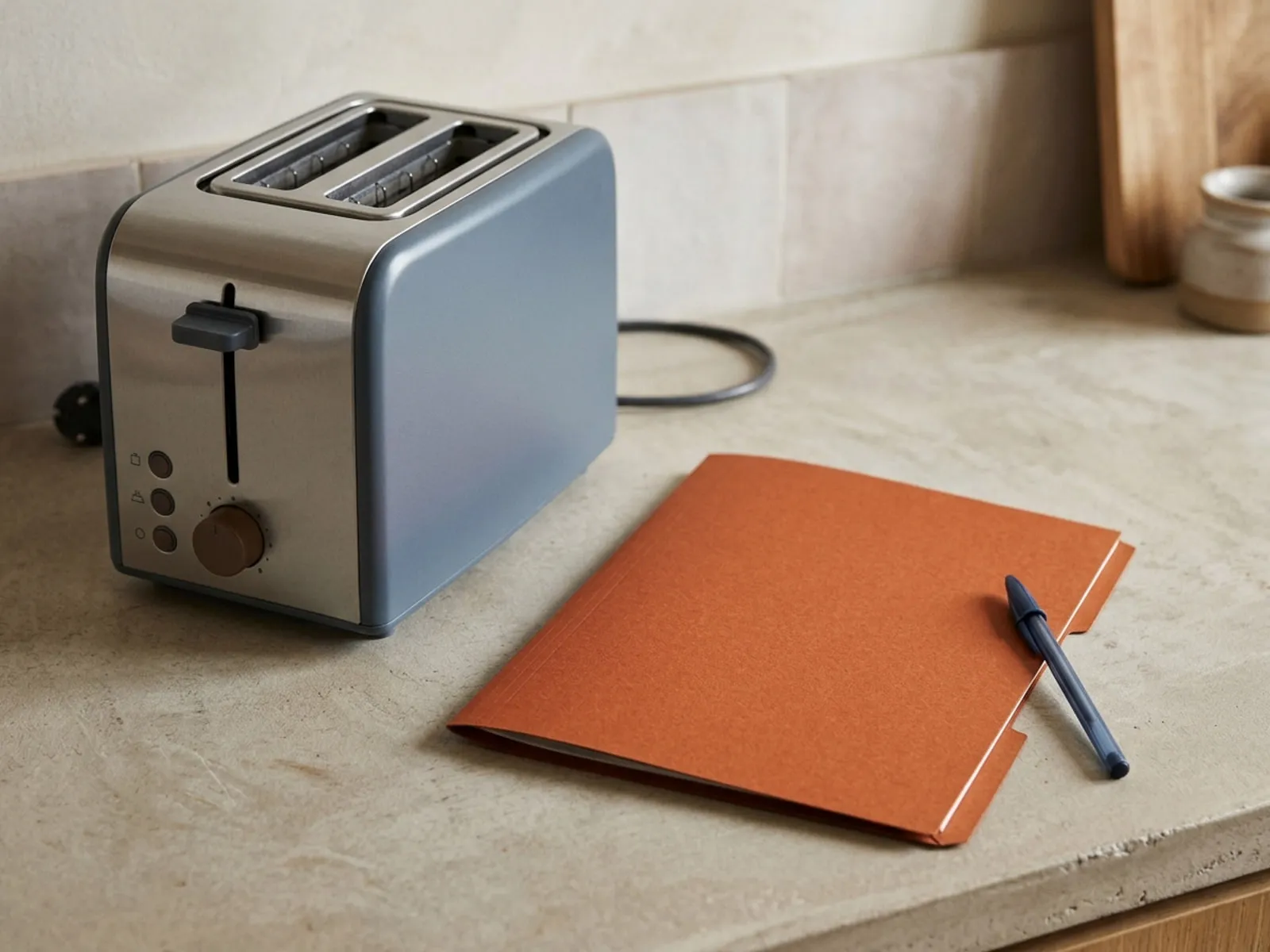
Build the register in three passes
Do it in short sessions instead of one marathon.
Pass one is a walk-through with a phone. Photograph each rating plate and the appliance itself, and save the photos in one album or folder named for the register.
Pass two is typing. Put the details into a spreadsheet or a shared note. One row per appliance works well, with columns for the fields above. Link or save the manual and the receipt next to the row.
Pass three is dates. Put every warranty end date and every recall check into the household calendar. The household bill calendar is a good home for warranty expiry dates, and the maintenance calendar suits filter changes and descaling. A warranty reminder about a month before expiry gives time to notice a problem and file a claim while coverage still applies.
Keep it current
Update the register whenever something is bought, replaced or repaired. Add a line for each repair with the date, the problem and the cost, because a pattern of repeat repairs helps you judge when replacement makes sense. A repair history is also useful if a claim or a dispute comes up.
Once a year, pair the recall search with your regular review in the household operating rhythm. If you rent, include only what you own; the landlord’s appliances belong in the lease file, with a note of who to call.
For the money side of an appliance that has died, such as how to budget for a replacement, see Money Master at https://moneymaster.fyi/.
Common questions
Do I need the receipt to use a warranty? Often it helps, because it proves the purchase date. Check the warranty wording, and keep a photo of the receipt in the register.
What if I cannot find the model number? Look in the manual, the original packaging or the manufacturer’s online account, if you registered. If none of these works, a service technician can usually read it from the unit.
Does the register need to be digital? No. A paper binder works if you can find it. A digital copy has the advantage of being searchable and easy to share with the rest of the household.
Sources checked November 18, 2026: FTC business guidance on federal warranty law; CPSC recall search page; SaferProducts.gov. The paperwork on your own appliances governs your coverage.