Build a household emergency food and water supply before you need it
How to work out the water and non-perishable food your household would need for several days at home, then store, rotate and adjust it for pets and special diets.

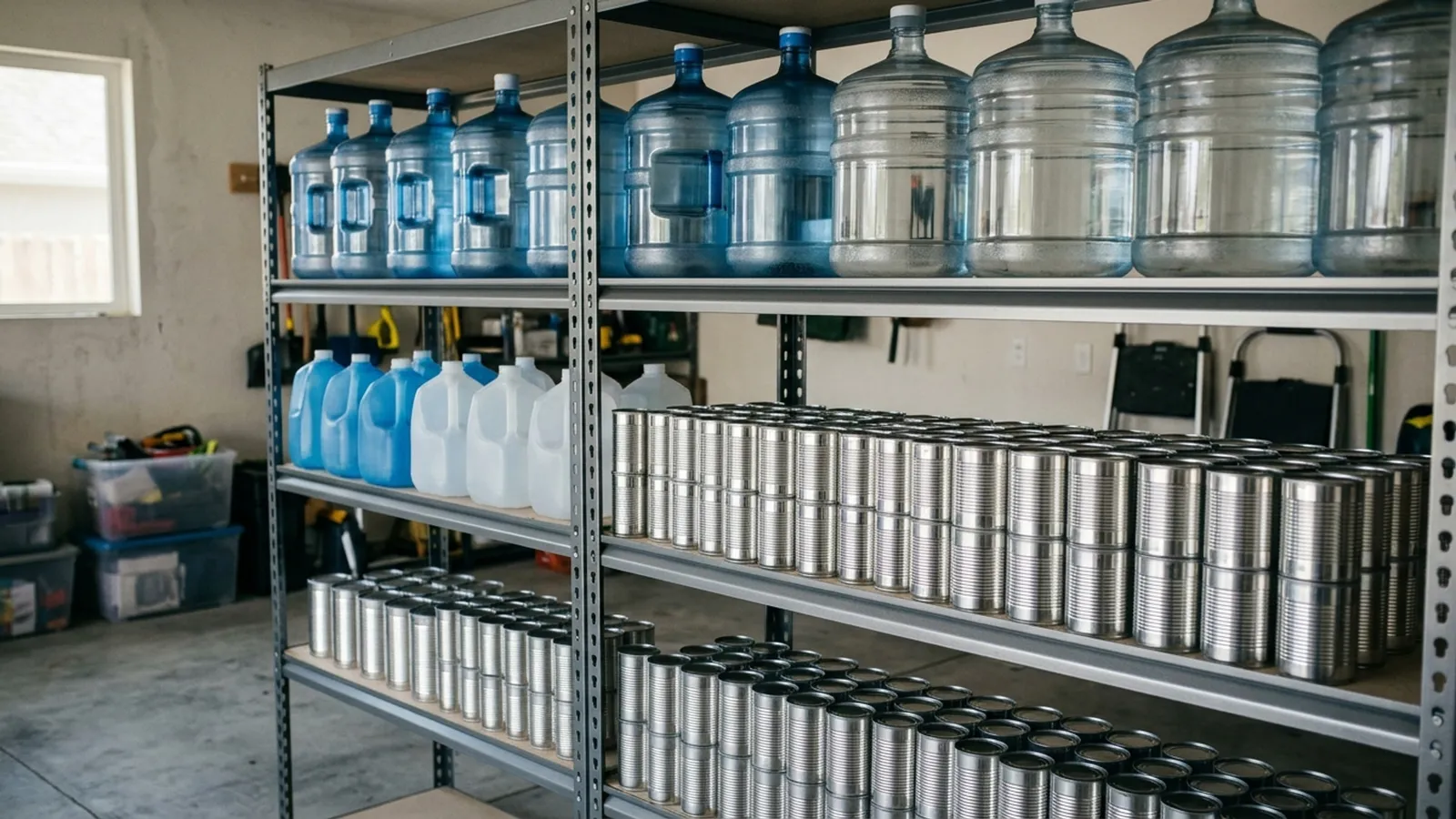
Most households could get through a day without power or running water. A longer outage, a storm that closes the roads or a burst main is where an empty pantry and no water on hand become a problem.
The aim here is modest: enough water and food to stay put for several days, kept somewhere you can find it, and checked often enough that it is still good when you need it. You do not need a bunker or specialist freeze-dried buckets to start.
Start with the water, because it is the easy number
Water is the one item with a clear per-person figure. Ready.gov advises storing at least one gallon of water per person per day for several days, for drinking and sanitation. It adds that a normally active adult needs roughly 0.75 gallons of fluid daily, and that very hot weather can roughly double that need (Ready.gov: water, checked November 18, 2026).
On duration, the sources differ slightly in wording. Ready.gov says “several days.” The CDC’s emergency-water page is more specific: at least one gallon per person per day for three days, and a two-week supply if you can manage it (CDC: create and store an emergency water supply, checked November 18, 2026). Treat three days as a floor and two weeks as a stretch goal, and choose what your storage space allows.
An invented example: a household of two adults, one child and one dog. For the people, that is 3 people × 1 gallon × 3 days = 9 gallons for the minimum, or 3 × 1 × 14 = 42 gallons for two weeks. The CDC page says to store more for pregnant women, sick people, pets and hot climates, but gives no pet figure, so ask your veterinarian how much extra to add for the dog.
Choose how to store water
The simplest route is commercially bottled water kept sealed in its original container in a cool, dark place. Ready.gov says water that was not commercially bottled should be replaced every six months. The CDC says to replace stored tap water every six months and to observe the expiration date on store-bought water.
If you fill your own containers, the CDC advises FDA-approved food-grade containers. Otherwise pick one with a tight-closing top, made of unbreakable material (not glass), ideally with a narrow opening. Wash it, then sanitize it with 1 teaspoon of unscented household bleach per quart of water, shake, wait at least 30 seconds, pour out and let it air-dry. Never reuse a container that held bleach, pesticides or other toxic chemicals. The CDC suggests a cool spot of 50°F to 70°F, out of direct sunlight and away from gasoline or pesticides. Check the CDC page for the current sanitizing steps before you fill your own.
Choose food your household will actually eat
Ready.gov asks for at least a several-day supply of non-perishable food and says to account for any special dietary needs (Ready.gov: food, checked November 18, 2026). It does not set a number of days, so the same “three days minimum, more if you can” logic applies as for water.
The practical test is simple: would you eat it on an ordinary Tuesday? Canned soups, beans, tuna or chicken, peanut butter, crackers, dried fruit, shelf-stable milk and cereal are all things many households already buy. If you build the supply from foods you cook with, rotating it becomes part of normal shopping. The weekly meal plan can show which of these staples you already use.
Ready.gov also says to include a manual can opener and eating utensils. Think about how you would heat food, or whether you would rather choose items you can eat cold, since a power cut may take the stove with it. Heating food safely without electricity or gas is a separate safety question that this guide does not cover.
Do not eat food from cans that are swollen, dented or corroded, and do not eat anything that looks or smells abnormal, even if the can looks normal, according to Ready.gov.
Rotate so nothing quietly expires
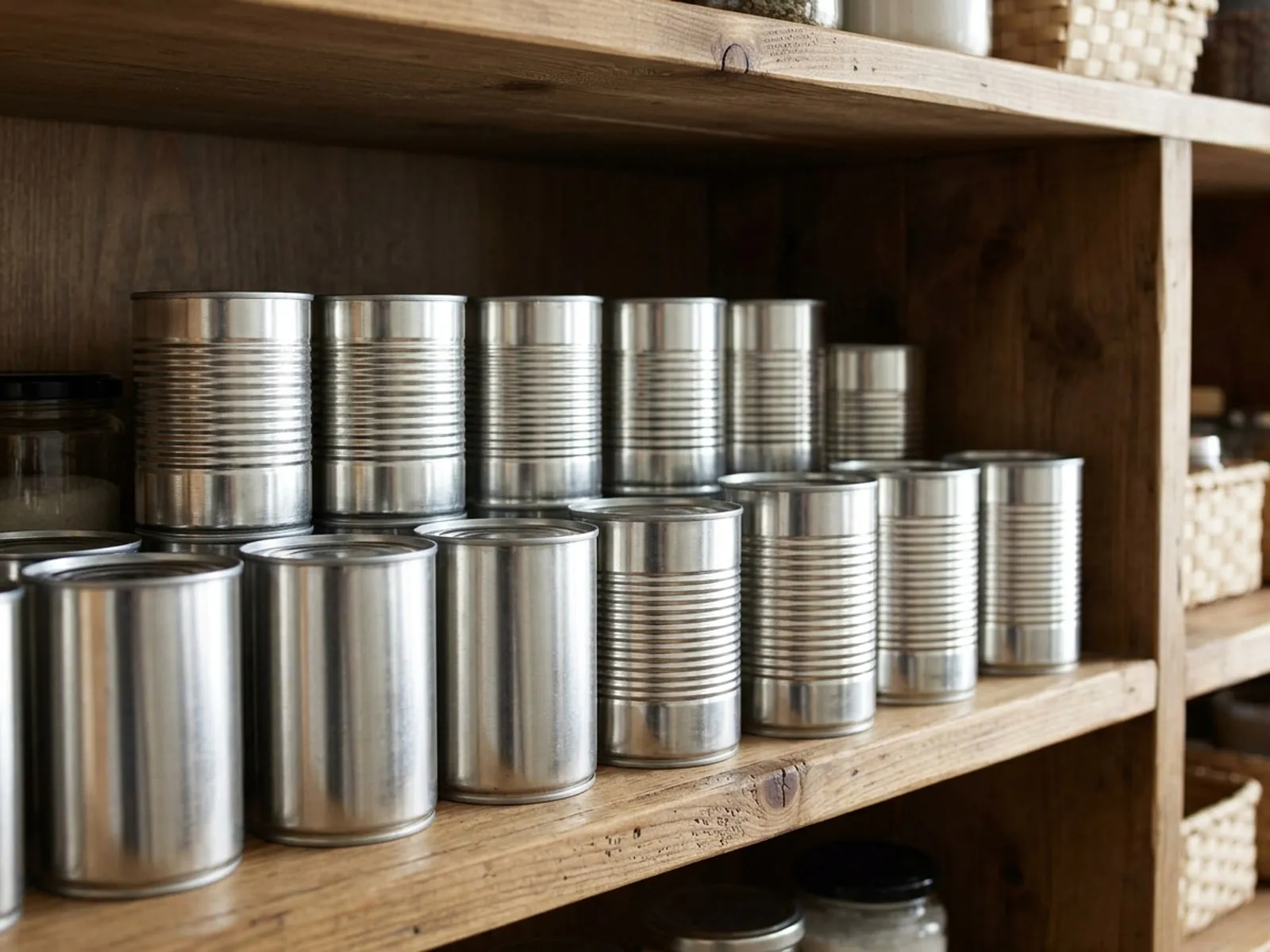
Ready.gov’s kit guidance says to keep canned food in a cool, dry place, replace expired items as needed, and revisit your needs every year as your household changes (Ready.gov: build a kit, checked November 18, 2026).
A single yearly reminder is the easiest approach. Put a date on a shelf label when you buy, move older items to the front and use them in regular meals, then replace them on the next shopping trip. If you keep a household calendar, add the check to it; this guide to running a household shows how. The water check is more frequent: every six months for water you filled yourself.
Include pets and special diets
Ready.gov’s pet guidance says to keep several days’ supply of food in an airtight, waterproof container, along with a water bowl and several days’ supply of water. It also advises an extra supply of any regular medicine, in a waterproof container, and a carrier or crate for each pet. It asks you to review the kit regularly so that food and medicines stay fresh (Ready.gov: pets, checked November 18, 2026).
For people, the kit page lists prescription medications, infant formula and diapers, and glasses or contact lens solution as examples of items to add. It notes that in an emergency it can be hard to refill prescriptions or find an open pharmacy. Ready.gov’s household-planning page also lists medical needs, dietary needs, different ages, disabilities and pets or service animals as things to consider (Ready.gov: make a plan, checked November 18, 2026).
If someone follows a medical diet, has allergies or depends on infant formula, do not rely on a general kit. Talk to their clinician about what to stock and how long it keeps. Ready.gov’s food page says to use ready-to-feed formula, and that if you must mix infant formula you should use bottled water, or boiled water as a last resort, so check formula and water together.
What if the power goes out and the fridge fails?
Ready.gov says to discard perishable food that has been above 40°F for two hours or more, keep the refrigerator and freezer doors closed, and expect an unopened refrigerator to keep food cold for about four hours. That is why the shelf-stable supply matters: it is what you can still eat when the fridge cannot be trusted.
For paying for the supply gradually, and building a cash cushion for emergencies, see Money Master.
Common questions
How much water do I need per person? Ready.gov and the CDC both say at least one gallon per person per day. The CDC specifies three days as a minimum and two weeks if possible.
How many days of food should I store? Ready.gov says a several-day supply of non-perishable food, without naming a number. Three days is a reasonable starting point; more is better if you have space.
How often should I replace stored water? Every six months for water you filled yourself, and by the expiration date for commercially bottled water.
What about pets? Several days’ food and water, extra medicine and a carrier. The official pages give no per-pet water amount, so ask your veterinarian.
Is this medical or emergency-management advice? No. It is general information. Your local emergency management office may have guidance specific to the hazards in your area.
Sources checked November 18, 2026: Ready.gov (water, food, kit, pets, plan); CDC (create and store an emergency water supply).